
The pothos you bought at the grocery store is one of more than a dozen named cultivars in the Epipremnum aureum family. Most people see only the classic Golden Pothos, but the wider world includes near-white Marble Queens, neon-bright greens, swirled patented Manjulas, and lobed climbing Cebu Blues that look nothing like the standard heart-leaved pothos.
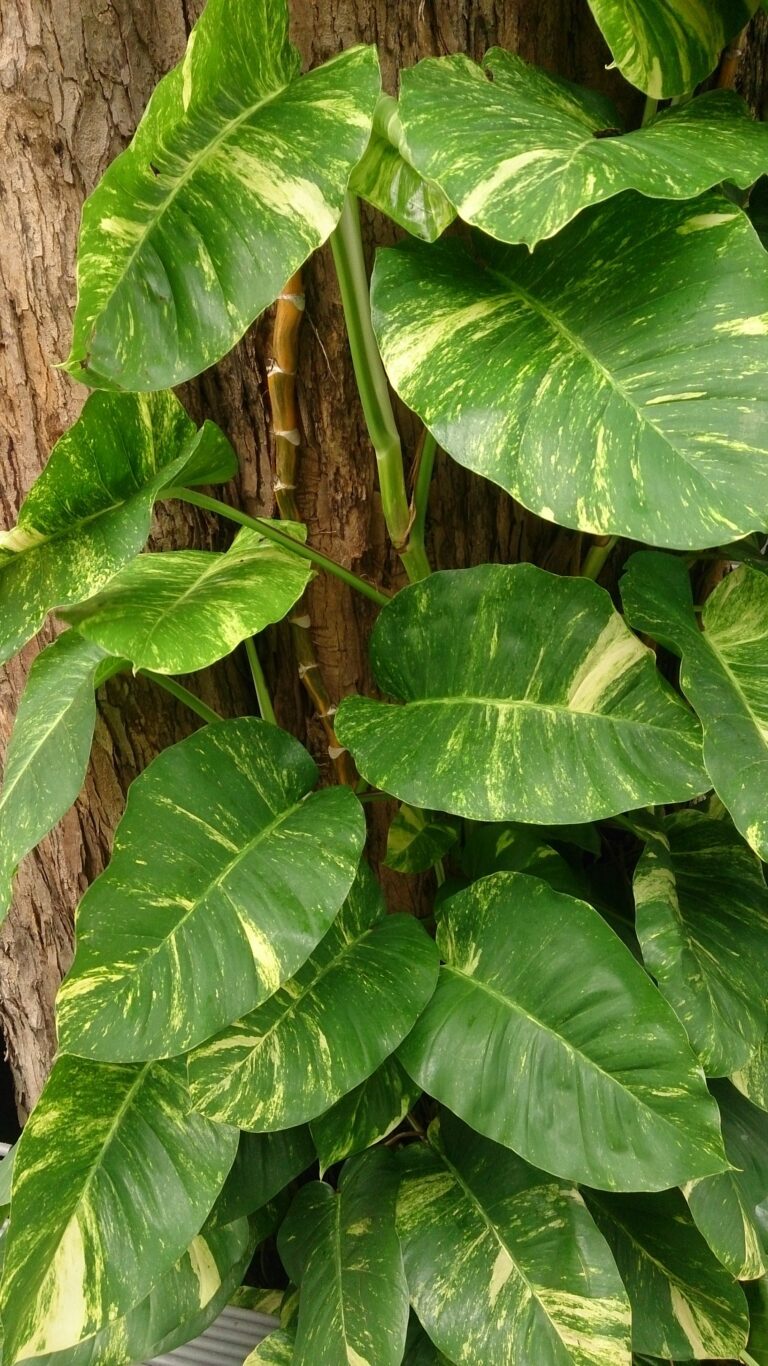
This guide covers the 8 most worth-knowing pothos varieties: what they look like, how care differs, where to find them, and what to expect at the price point.
Quick Answer: Best Pothos Varieties
The 8 best pothos varieties for indoor growing are Golden Pothos (the classic yellow-streaked), Marble Queen (heavy white variegation), Neon (chartreuse-glowing solid green), N’Joy (compact white-edged), Pearls and Jade (small white-speckled), Manjula (swirled white-cream-green), Jade (solid deep green for low light), and Cebu Blue (silvery-blue with eventual fenestration). Care is nearly identical across cultivars, but variegated varieties need brighter light to maintain patterns.
What All Pothos Varieties Have in Common
Every variety on this list is an Epipremnum aureum cultivar (with one exception, Cebu Blue, which is technically Epipremnum pinnatum). All share:
- Watering needs. Every 7-10 days summer, every 10-14 days winter, when top inch of soil is dry.
- Light tolerance. Bright indirect ideal, tolerates medium to low (variegated cultivars need brighter light).
- Soil preference. Standard indoor potting mix with extra perlite for drainage.
- Pet toxicity. All pothos varieties are toxic to cats and dogs (calcium oxalate crystals). The ASPCA’s pothos toxicity entry covers symptoms and severity.
- Easy propagation. Stem cuttings root in water within 1-3 weeks for any pothos variety.
The differences between varieties are mostly visual: leaf size, color, variegation pattern, and growth speed.
1. Golden Pothos (The Classic)
The original and still most common pothos variety. Heart-shaped green leaves splashed with irregular yellow variegation. Grows fast (2-4 inches per week in good conditions), tolerates low light better than most variegated pothos, and produces vines 3-10+ feet long indoors. The default pothos in every big-box store.
Care notes: Tolerates a wide range of light conditions while maintaining variegation. The most beginner-friendly variety.
Availability: Every nursery, big-box store, grocery chain. $10-$20 for a 6-inch pot.
2. Marble Queen
Heavily variegated pothos with green and white marbled patterns. Each leaf has dramatically different markings. Grows slower than Golden because the white areas have no chlorophyll. In bright light, the white stays crisp; in dim light, leaves gradually become more green.
Care notes: Needs more light than Golden Pothos to maintain variegation. Best near east or west-facing windows. Slower growth means smaller eventual size.
Availability: Common at nurseries. $15-$30.
3. Neon Pothos
Bright chartreuse, almost glowing, solid color (no variegation). New leaves are almost yellow, maturing to brighter green. Keeps its lime color best in medium-bright indirect light. In low light it darkens toward sage green.
Care notes: One of the fastest-growing pothos varieties. Easy to propagate. Eye-catching as a hanging plant or trailing from a high shelf.
Availability: Common at nurseries and online specialists. $15-$30.
4. N’Joy Pothos
Compact variety with smaller leaves than Golden. Green leaves with bold patches of pure white (rather than marbled). Slower-growing and more contained than other pothos varieties. Stays bushier and more upright.
Care notes: Needs bright indirect light to maintain variegation. Compact size makes it ideal for shelves and small spaces. Holds variegation more reliably than Marble Queen.
Availability: Specialty nurseries and online. $20-$40.
5. Pearls and Jade
Often confused with N’Joy, but Pearls and Jade has finer speckling and a distinctive silvery-pearl undertone in the white areas. Smaller leaves, slower growth, more delicate appearance.
Care notes: Same as N’Joy. Needs bright indirect light. Compact growth. Visually one of the most refined pothos cultivars.
Availability: Specialty plant shops and online. $20-$40.
6. Manjula Pothos
A patented variety (released in 2010) with swirling white, cream, green, and silver variegation on each leaf. Each leaf is uniquely patterned. Slower-growing than other pothos varieties and more expensive. Spectacular on a shelf.
Care notes: Needs the brightest indirect light of any common pothos variety to maintain variegation. Holds variegation unevenly; some leaves may revert. Difficult to propagate reliably from cuttings (variegation may not transfer cleanly).
Availability: Online specialists and specialty nurseries. $40-$80.
7. Jade Pothos
Solid deep green, no variegation. Extremely vigorous grower, tolerates the lowest light of any pothos variety. The choice for dim offices, hallways, basement living rooms, and bathrooms.
Care notes: The most low-light-tolerant pothos. Grows fast even in marginal conditions. Not as photogenic as variegated varieties but vastly easier in dim spaces.
Availability: Common at nurseries. $10-$20.
8. Cebu Blue Pothos
Technically Epipremnum pinnatum, not aureum, but almost always grouped with pothos. Narrow, silvery-blue leaves that turn lobed and dramatic with age and support. Climbs beautifully on moss poles. Mature climbing leaves can develop split fenestration similar to monstera.
Care notes: Same care as standard pothos. Looks completely different from typical heart-shaped pothos. Becomes increasingly impressive over years on a moss pole.
Availability: Specialty nurseries and online. $20-$50.
Pothos Varieties Comparison Table
| Variety | Leaf Style | Variegation | Light Needs | Growth Speed | Price Range |
|---|---|---|---|---|---|
| Golden | Heart-shaped | Yellow streaks | Any indirect | Fast | $10-$20 |
| Marble Queen | Heart-shaped | White marbled | Bright indirect | Medium | $15-$30 |
| Neon | Heart-shaped | Solid chartreuse | Medium-bright | Fast | $15-$30 |
| N’Joy | Smaller, compact | White patches | Bright indirect | Slow | $20-$40 |
| Pearls and Jade | Smaller, refined | White speckles | Bright indirect | Slow | $20-$40 |
| Manjula | Heart-shaped | Swirled multi-color | Bright indirect | Slow | $40-$80 |
| Jade | Heart-shaped | None (deep green) | Any (low OK) | Fast | $10-$20 |
| Cebu Blue | Narrow, blue | None (silvery) | Bright indirect | Medium | $20-$50 |
How to Choose the Right Pothos Variety
For absolute beginners
Start with Golden Pothos or Jade. Both are widely available, affordable, and the most forgiving cultivars. Save the rarer varieties for after you have kept a pothos alive for 6 months.
For low-light apartments
Choose solid-green varieties: Jade Pothos is unbeatable in dim conditions. Neon Pothos also handles medium-low light. Avoid Marble Queen, N’Joy, Pearls and Jade, and Manjula in low light; they will lose their variegation.
For shelf or small-space displays
N’Joy or Pearls and Jade stay smaller and more compact than other pothos. Golden Pothos can also work as a small shelf plant if you trim regularly.
For statement hanging baskets
Golden, Marble Queen, or Neon in a hanging basket produce dramatic 3-6 foot vines within a year. Big-box stores often sell these specifically as hanging plants.
For climbing on a moss pole
Cebu Blue is the standout choice. Mature leaves develop split fenestration similar to monstera. Golden Pothos also climbs well but stays juvenile (smaller leaves) longer.
For collectors
Manjula, Cebu Blue, and rarer cultivars (Global Green, Harlequin, Shangri-La) are worth seeking out from specialty growers. Prices can climb past $100 for mature specimens of less common varieties.
How to Identify Your Unknown Pothos Variety
Quick identification guide if you bought a pothos without a variety tag:
- Variegation pattern: Yellow streaks on green = Golden. Heavy white marbling = Marble Queen. Patches of white on green = N’Joy. Fine white speckling = Pearls and Jade. Swirled multi-color = Manjula.
- Color (solid leaves): Bright chartreuse glowing = Neon. Deep solid green = Jade. Silvery-blue narrow = Cebu Blue.
- Leaf shape: Standard heart shape = most varieties. Smaller, more rounded = N’Joy or Pearls and Jade. Narrow elongated = Cebu Blue.
- Growth habit: Fast trailing vines = Golden, Neon, Jade. Compact upright bush = N’Joy, Pearls and Jade. Climbing with growing leaves = Cebu Blue.
If you are still unsure, snap a photo and post in a pothos or houseplant collector group on Facebook. Members can usually identify cultivars from a clear photo within hours.
Where to Buy Rare Pothos Varieties
Big-box stores
Home Depot, Lowe’s, IKEA, and grocery chains reliably carry Golden Pothos, Marble Queen, Neon, and Jade. Don’t expect anything more unusual.
Local independent nurseries
Often carry N’Joy, Pearls and Jade, and Cebu Blue. Best for choosing in person.
Online plant specialists
The Sill, Pistils Nursery, Logee’s, Steve’s Leaves, and various Etsy growers offer the rarest cultivars including Manjula, Global Green, and Harlequin. Expect to pay $40-$200+ depending on rarity and size.
Plant trades and Facebook groups
Active pothos collector communities trade rare cultivars at much lower prices than commercial sellers. Cuttings are especially affordable through trades.
FAQ
Is variegated pothos care different from regular pothos care?
Slightly. Variegated varieties (Marble Queen, N’Joy, Pearls and Jade, Manjula) need brighter indirect light to maintain their patterns. In low light, they revert toward solid green over months. Otherwise, watering, soil, and fertilizing are identical across varieties.
How do I tell if my pothos variety is rare or common?
Look it up by name. Common varieties (Golden, Marble Queen, Neon, Jade, N’Joy) appear at most garden centers and cost $10-$30. Rare varieties (Manjula, Pearls and Jade, Global Green, Harlequin) are sold by specialty growers and cost $30-$200+.
Why is my Marble Queen turning more green?
Insufficient light. The white parts of Marble Queen leaves have no chlorophyll, so the plant compensates in low light by producing more green tissue. To restore variegation, move closer to a window or add a grow light. New growth in better light returns to variegated.
Can I grow multiple pothos varieties together in one pot?
Yes. Multiple cultivars share the same care requirements. A pot with Golden, Marble Queen, and Neon makes a striking mixed display. Just ensure each cutting has enough space to root (1-2 inches between stems minimum).
What is the rarest pothos variety?
True rarities include Harlequin Pothos (heavily white-variegated), Pothos Albo (white-streaked), and various crested or split-leaf cultivars. Prices for mature specimens can exceed $300. Most home growers should focus on the 8 varieties in this guide rather than chase ultra-rares.
Do all pothos varieties have the same toxicity to pets?
Yes. Every Epipremnum cultivar contains the same calcium oxalate crystals and is toxic to cats and dogs at the same level. The variety does not change the toxicity. Keep all pothos out of reach if your pet is a known plant chewer.
Building a Pothos Collection
Many pothos collectors maintain 5 to 15 different cultivars across their home, choosing one or two from each visual category for variety:
- One classic vining variety: Golden or Marble Queen as a hanging basket centerpiece.
- One bright-color variety: Neon for visual contrast.
- One compact shelf variety: N’Joy or Pearls and Jade for desks and bookshelves.
- One low-light specialist: Jade for the dim hallway or windowless bathroom.
- One climber: Cebu Blue on a moss pole as a long-term sculptural piece.
- One collector showpiece: Manjula or a rarer cultivar as the display plant.
This combination covers nearly every visual look pothos can offer while keeping all care requirements roughly similar. The same watering schedule and basic light needs apply to all of them, making a pothos collection genuinely manageable even for busy plant owners.
Pothos Variety Knowledge Pays Off
Knowing your pothos cultivar changes how you care for it (light needs especially) and what you can expect from it (growth speed, variegation stability, mature appearance). It also unlocks a much richer plant-collecting hobby than just owning “a pothos.”
For the broader pothos care system, see our complete pothos care guide. For propagation, the pothos propagation guide covers method by method. For watering tailored to pothos, the watering schedule guide applies to every variety on this list.
One species, dozens of looks. The same easy care, every time.
Related reading: For the broader context, see the complete guide to hard-to-kill houseplants, all plant care guides, complete watering guide.