
Pothos is the plant you give to someone after they kill three in a row and tell you they are “just not plant people.” I have watched pothos survive a vacant apartment for five weeks with no water, a month in a cardboard moving box, and a winter next to a radiator vent. They come back from nearly everything.
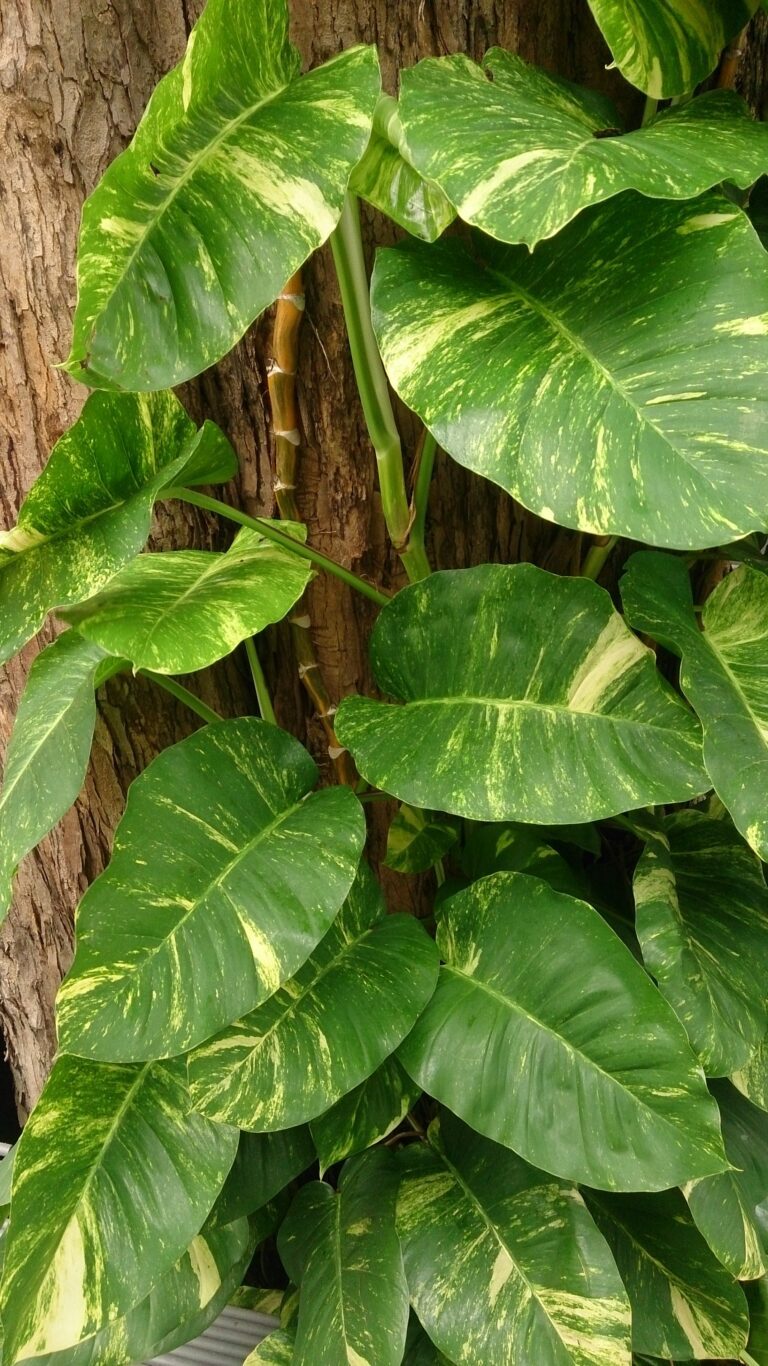
If a snake plant is the unkillable statue of the houseplant world, pothos is the unkillable vine. It grows fast enough to feel rewarding, forgives almost every mistake, and propagates from a piece of stem dropped in a jar of water. This is the plant that converts plant-killers into plant-people.
Why Pothos Is Perfect for Black Thumbs
Most vining tropical plants (philodendrons, hoyas, monsteras) are relatively forgiving, but pothos takes forgiveness further than any of them. Its leaves are thick and waxy, designed to hold water during dry spells in the Solomon Islands canopy where it evolved. It tolerates low light better than almost any decorative vine. It handles irregular watering. It adapts to the air in a dry, over-heated apartment without a humidifier.
Crucially, pothos tells you what it needs. A thirsty pothos droops visibly within 24 hours and perks back up within 2 hours of watering. An overwatered pothos turns leaves yellow in a pattern you can learn to read. Most other houseplants fail silently and then collapse. Pothos is a plant with a working user interface.
In my experience, the only people who kill pothos are the ones who forget the plant exists completely. And even then, the plant gives you multiple warnings before giving up.
Quick Care Summary
| Parameter | Requirement |
|---|---|
| Light | Bright indirect preferred, tolerates medium to low |
| Water | Every 7 to 10 days (summer), every 10 to 14 days (winter) |
| Humidity | 40% to 60% ideal, tolerates down to 20% |
| Temperature | 65°F to 85°F (18°C to 29°C) |
| Soil | Standard indoor potting mix with added perlite |
| Fertilizer | Balanced liquid, half-strength, monthly in spring/summer |
| Pet Safe | No — toxic to cats and dogs (calcium oxalates) |
| Difficulty | 1 / 10 (beginner proof) |
Pothos Basics: Know What You Are Growing
The plant sold as pothos is almost always Epipremnum aureum, a climbing aroid native to the Solomon Islands in the South Pacific. Some plants sold as pothos are actually Scindapsus pictus (satin pothos), a cousin in the same family but a different genus. The care is similar, but if you want to be precise, check the tag.
Pothos belongs to the family Araceae, the aroid family, which also includes monsteras, philodendrons, peace lilies, ZZ plants, and anthuriums. That relationship explains why so many of those plants have similar care: they all evolved as understory climbers in tropical rainforests.
In the wild, pothos climbs high into the forest canopy using aerial roots to anchor itself to tree bark. Leaves in nature can reach two feet across and develop deep lobes similar to monstera. Indoor pothos stays juvenile because your apartment ceiling is not a 30-meter tree. The small, heart-shaped leaves you are used to are technically the immature form.
Common names worth knowing:
- Devil’s Ivy (because it refuses to die, even in the dark)
- Money Plant (in South Asian tradition, associated with prosperity)
- Hunter’s Robe
- Ivy Arum
- Taro Vine
All of these refer to Epipremnum aureum. None of them are true ivy.
Pothos Varieties Worth Knowing
There are more than a dozen commonly sold pothos varieties, and the variety you pick changes what the plant looks like more than how you care for it. Care is nearly identical across all cultivars, with one major exception: the more variegation a variety has, the more light it needs.
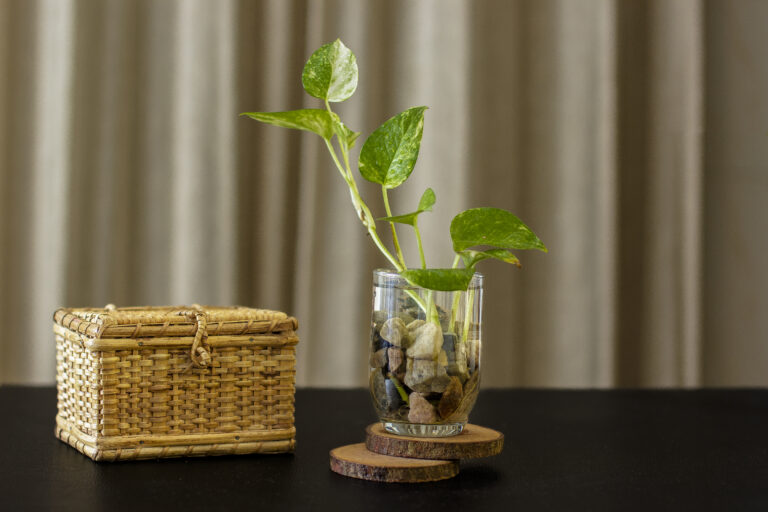
Golden Pothos
The original and still the most common. Heart-shaped green leaves splashed with irregular yellow variegation. Grows fast, tolerates low light better than most variegated pothos. The default pothos in every big-box store.
Marble Queen
Slower growing, heavily variegated with white and green in a marbled pattern. Needs brighter light than Golden because the white areas have no chlorophyll. Stunning in a bright room, boring in a dim one.
Neon
Bright chartreuse, almost glowing, no variegation. Keeps its lime color best in medium-bright indirect light. In low light it turns darker green. One of the fastest-growing pothos varieties.
N’Joy and Pearls and Jade
Compact, slower-growing, with small, crisp white-and-green variegation. Smaller leaves, tidier habit, perfect for shelves and smaller spaces. Often confused with each other (N’Joy is more patchy, Pearls and Jade has finer speckling).
Manjula
A newer patented variety with swirling white, cream, green, and silver variegation on each leaf. Slower growing, moderately pricey, spectacular on a shelf. Harder to propagate reliably and holds variegation unevenly.
Jade
Solid deep green, no variegation. Extremely vigorous, tolerates the lowest light of any pothos. The choice for dim offices, hallways, and bathrooms.
Cebu Blue
Technically Epipremnum pinnatum, not aureum, but almost always grouped with pothos. Narrow, silvery-blue leaves that turn lobed and dramatic with age and support. Climbs beautifully on moss poles.
For the full cultivar list including rarer finds like Global Green, Harlequin, and Shangri-La, see our pothos varieties guide.
Light Requirements: Where to Put Your Pothos
Pothos is famous for tolerating low light. That reputation is earned, but it hides a nuance: “tolerating” and “thriving” are different things. A pothos in a dim corner will live for years. A pothos in bright indirect light will climb, fill out, and produce leaves twice the size.
The ideal placement
Three to six feet from an east-facing or west-facing window, where the plant gets bright filtered light for most of the day without direct midday sun. South-facing works too, but keep the plant a little further back or behind sheer curtains.
What it will tolerate
- North-facing windows: Fine for solid green varieties like Jade. Variegated pothos will lose pattern in this light.
- Interior rooms, offices, bathrooms: Most pothos survive here, especially with overhead fluorescent or LED light.
- Direct sun for a few hours: Tolerated if acclimated slowly, but leaves can bleach or develop crispy edges.
- Windowless rooms: A grow light for 8 to 12 hours daily makes the difference between slow decline and healthy growth.
Signs of wrong light
Too little light: Long gaps between leaves on the stem (leggy growth), smaller leaves than the older ones, loss of variegation in cultivars like Marble Queen or Manjula. Growth slows to a crawl.
Too much light: Pale, washed-out leaves. Crispy brown edges. Curling inward toward the stem. Usually only a problem in an unshaded south-facing window in summer.
Because pothos responds visibly within a few weeks to light changes, it is an excellent plant for figuring out your home’s lighting before you commit to fussier species. See our complete indoor plant light guide for more.
Watering: How to Read Your Pothos
Pothos is the rare houseplant that tells you when it is thirsty by drooping noticeably. Once you have watered one and watched it bounce back, you will rarely misjudge timing again. It is the single most beginner-friendly watering signal in indoor plant care.
The practical schedule: water when the top inch of soil feels dry. For most homes, this is once every 7 to 10 days in summer and every 10 to 14 days in winter. Larger pots and cooler rooms stretch the schedule; smaller pots and heated rooms compress it.
How to check
- The finger test. Push your finger 1 inch into the soil. If it is dry, water. If it feels cool and slightly damp, wait a few more days.
- The droop test. Pothos leaves go limp and slightly soft when thirsty. This is your five-alarm reminder. Water, and the leaves perk back up within 2 to 4 hours. This is normal; it does not harm the plant occasionally, but do not let it happen every watering cycle.
- Pot weight. Lift the pot when freshly watered and again a week later. The difference becomes intuitive fast.
How to water properly
Water slowly and evenly over the entire soil surface until you see water draining freely from the bottom. Let it drain fully, empty any standing water in the saucer, and move on. Do not water again until the top inch is dry.
Overwatering warning signs
Yellow leaves starting at the base of the plant. Soft, limp stems near the soil line. A musty or sour smell from the pot. Black spots forming at the base of stems.
Pothos tolerates occasional overwatering better than snake plants because the thinner roots dry out faster. But consistent soggy soil causes root rot that kills even pothos. The fix is always the same: stop watering, let the soil dry fully, remove any rotting roots at the next repotting.
A $10 moisture meter removes every watering judgment call. If you have killed pothos before from overwatering, the meter is worth the cost. For the full watering playbook across all seasons and pot types, see our pothos watering guide.
Soil and Potting
Pothos is not picky, but two decisions matter: drainage and pot size. Get these right and the plant forgives nearly everything else.
The right mix
A standard indoor potting mix with extra perlite works perfectly. A good ratio:
- 3 parts indoor potting soil
- 1 part perlite
- Optional: a handful of orchid bark for extra airflow
Pothos likes slightly acidic soil (pH 6.1 to 6.8), which most commercial potting mixes already provide. Avoid heavy, dense soils (garden soil, peat-only mixes) that stay wet for days.
Pot material
Plastic, ceramic, terracotta, or metal all work. Terracotta dries fastest, which suits people who tend to overwater. Plastic holds moisture longer, better for those who forget. Choose based on your habits, not aesthetics.
Drainage is mandatory
Every pothos pot needs a drainage hole. If you want to use a decorative pot without one, use the cachepot method: keep the plant in a plastic nursery pot, set it inside the decorative pot, and lift the inner pot out every time you water.
Pot size
Pothos enjoys being slightly root-bound. When repotting, go up only 1 to 2 inches in diameter. A pothos in a too-large pot sits in wet soil longer than the roots can use, leading to rot. Repot every 1 to 2 years, or when roots start growing out of the drainage holes.
Fertilizing Your Pothos
Pothos grows fast enough to benefit from regular feeding, but it is easy to overdo. Err on the side of less.
What to use
A balanced liquid fertilizer (10-10-10 or similar NPK ratio) diluted to half strength. Or a dedicated houseplant fertilizer formulated for foliage plants.
How often
Once a month during spring and summer is plenty. Skip fall and winter entirely. A pothos in low light needs less fertilizer than one in bright light because it is growing slower and using fewer nutrients.
Signs you are overdoing it
White crusty buildup on the soil surface or on the outside of terracotta pots. Brown, crispy leaf tips. Sudden leaf yellowing without overwatering symptoms. All signs of salt buildup from excess fertilizer.
The fix: flush the soil with plain water, letting it run through the pot for 2 to 3 minutes. This washes out accumulated salts. Skip fertilizer for the next 2 months.
How to Propagate Pothos
Pothos is arguably the easiest houseplant to propagate, period. A 4-inch stem cutting tossed in a jar of water roots in about two weeks. This is the plant you learn propagation on.
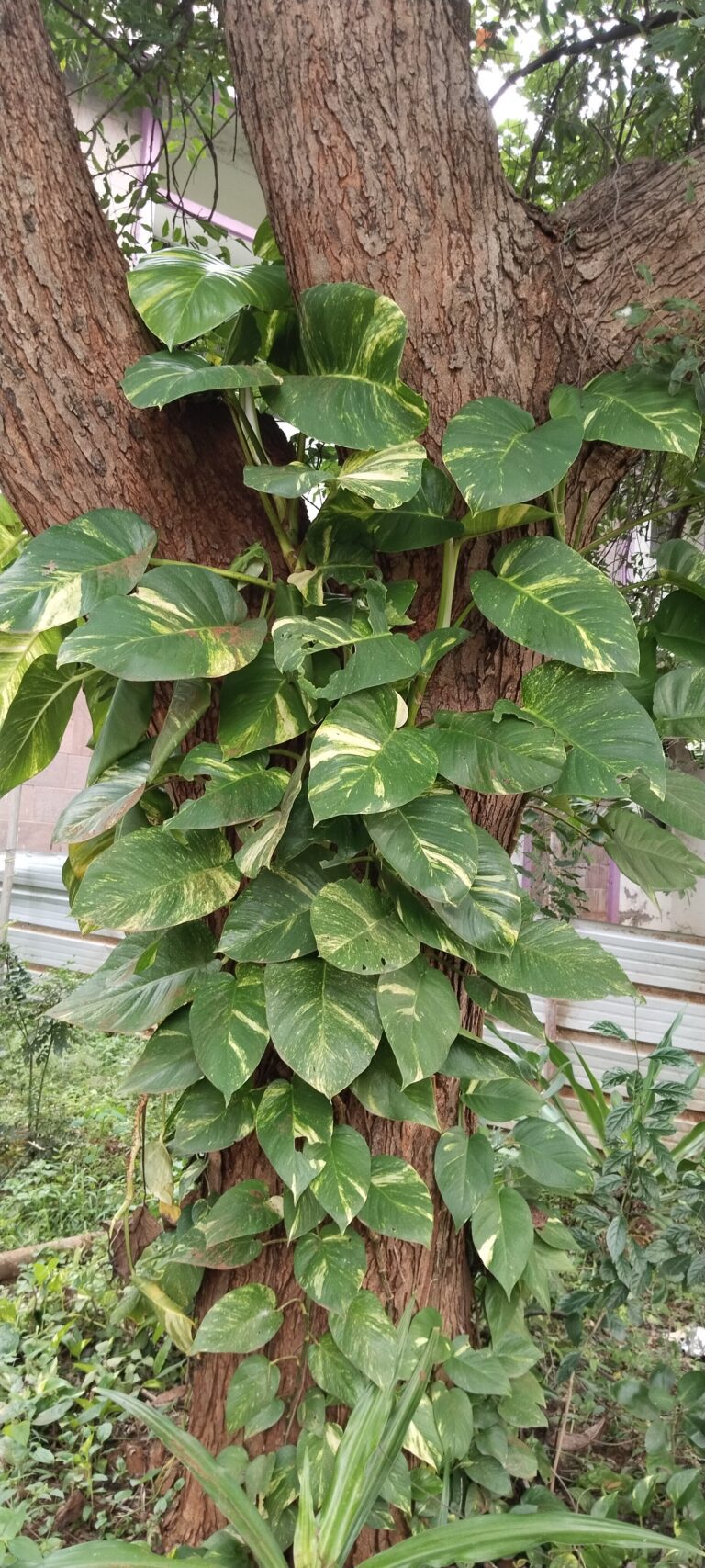
Water propagation (easiest)
Cut a healthy stem just below a node (the bump on the stem where a leaf attaches). Each cutting should have at least 2 to 3 leaves and 1 to 2 nodes. Remove the lowest leaf so the bottom node is bare. Put the cutting in a glass of room-temperature water with at least one node submerged. Change the water weekly. Roots appear in 1 to 3 weeks. Transplant to soil when roots are 2 to 3 inches long.
Soil propagation
Same cutting technique, but plant the bare node directly in moist potting soil. Keep soil lightly moist (not wet) until roots establish, usually in 3 to 5 weeks. Success rate is slightly lower than water propagation for beginners, but the resulting plant does not have to go through the transition shock of moving from water to soil.
Tips that make a difference
- Use clean, sharp scissors. Crushed stems rot before rooting.
- Put the jar somewhere with bright indirect light, not direct sun.
- A clear jar lets you watch root development, which is part of the fun.
- Variegated cuttings sometimes lose variegation if you take from an all-green section. Choose cuttings with clear variegation.
A single mature pothos can generate dozens of new plants per year. One cheap starter, one year, and you have plants for every room and every friend. For the full step-by-step with photos and troubleshooting, see our pothos propagation guide.
Common Pothos Problems
Most pothos problems trace to either watering or light. Four show up constantly.
Yellow leaves
Usually overwatering. Check the soil first. If it is soggy, hold off on watering for 1 to 2 weeks and reassess. Occasional yellow leaves on the oldest (lowest) part of the vine are normal aging and do not mean anything. Yellow spreading from multiple leaves at once indicates a bigger problem. Full diagnostic tree in the pothos yellow leaves troubleshooting guide.
Brown crispy tips
Low humidity, tap water chemicals (especially fluoride and chlorine), or fertilizer salt buildup. In winter in a heated apartment, some tip browning is nearly unavoidable; a humidifier helps. If tap water is the cause, let water sit out overnight before using, or switch to filtered.
Leggy growth with small leaves
Not enough light. Move closer to a window or add a grow light. Leggy stems can be pruned back and the cuttings propagated, so this problem also creates new plants.
Root rot
Dark, mushy roots. Base of stems turning black. Strong smell. Remove from pot, cut away rotted roots and stems, let the remaining healthy plant dry for 24 hours, repot in fresh dry soil, and water sparingly for the next 2 weeks.
Pests
Pothos occasionally attracts mealybugs (white cotton in leaf joints), spider mites (fine webbing, pale stippling), and scale (brown bumps on stems). Wipe affected areas with a cotton pad soaked in 70% isopropyl alcohol. For heavy infestations, insecticidal soap or a neem oil spray every 7 days for 3 weeks.
Is Pothos Toxic to Pets?
Yes. Pothos is toxic to cats and dogs, listed by the ASPCA. The toxic compounds are insoluble calcium oxalate crystals, found throughout the plant.
What happens if a pet chews on pothos
The calcium oxalate crystals cause immediate oral irritation, a burning sensation, drooling, vomiting, and in some cases difficulty swallowing. The reaction is painful but rarely life-threatening. Most pets spit it out quickly because of the burning.
What to do if it happens
Rinse your pet’s mouth with water to flush crystals. Call your vet or the ASPCA Animal Poison Control Center at 888-426-4435. Do not induce vomiting. Keep the animal hydrated and observe for swelling or breathing difficulty, which requires immediate vet attention.
Safer alternatives
If your pet chews plants, consider these non-toxic vining options with a similar look:
- Spider plant (Chlorophytum comosum)
- String of hearts (Ceropegia woodii)
- Swedish ivy (Plectranthus verticillatus)
- Hoya carnosa
See the complete pet-safe houseplants guide for vet-approved picks.
Styling and Placement Ideas
Pothos is the most flexible vining houseplant in existence. It trails, climbs, drapes, and hangs. A single plant can fill any empty visual space you have.
Hanging baskets
The default. A mature Golden or Marble Queen in a hanging basket produces vines 3 to 6 feet long within a year. Hang in front of a bright window or from a ceiling hook above a side table.
Shelves and bookcases
Trails beautifully down multiple shelves. Place the pot on the top shelf and let vines cascade. A single pothos can visually connect 3 to 5 shelves over time.
On a moss pole
Climbing pothos develops larger leaves and a more sculptural look. Attach vines to a moss pole with soft plant ties or loosely with twine. Keep the pole moist for aerial roots to grip. Some cultivars (Cebu Blue, Golden) develop dramatic fenestration on a pole.
Kitchen windows and bathrooms
Pothos thrives in the warm, humid air of bathrooms and kitchens. Place on a high shelf or in a hanging basket where steam reaches the leaves but they are not splashed.
Water propagation display
Keep a cutting or two in an attractive glass vase as both decor and an ongoing propagation project. Change water weekly.
What to avoid
Do not place pothos on the floor within reach of pets or toddlers. A hanging basket, high shelf, or wall-mounted planter keeps it safe.
Pruning and Training Your Pothos
Pruning is the one care task that visibly transforms a pothos within days. A leggy, bare-stemmed plant becomes a full, bushy one with one afternoon of work. Untrimmed pothos often looks stringy because each stem only grows from its tip; pruning encourages new growth from dormant nodes along the stem.
When to prune
Late spring through early summer is ideal, when the plant is actively growing and will rebound fastest. Avoid pruning in winter when growth is slow. You can remove up to 30% of the vines in one session without stressing the plant.
How to prune
Identify stems that are long and sparse. Using clean, sharp scissors or pruning shears, cut just above a leaf node. New growth will emerge from the node below the cut within 2 to 4 weeks. Every pruned cutting is a propagation opportunity, so keep the cuttings and root them in water.
Training on supports
Moss poles, trellises, and wall hooks all work for training pothos vertically. For a moss pole, attach the main vines using soft plant ties or loosely with velcro strips. Keep the pole damp (spray with water every few days) to encourage aerial roots to grip. Over 6 to 12 months a climbing pothos produces noticeably larger leaves than a trailing one.
Shaping into a full bush
To turn a hanging pothos into a bushier plant, cut back the longest vines by half, then tuck the trimmed ends back into the soil of the same pot (where they will root and produce new top growth). Within 2 to 3 months the pot fills out visibly.
Year-Round Pothos Care Calendar
Pothos grows year-round but most actively in warmer months. Small seasonal adjustments keep it looking its best.
Spring (March to May)
Growth accelerates as light increases. Water every 7 to 9 days once the top inch is dry. Resume monthly half-strength fertilizer. Best season to prune leggy growth and propagate cuttings. Repot if roots are growing out of drainage holes.
Summer (June to August)
Peak growth season. Water every 6 to 8 days. Continue monthly fertilizer. If vines are getting unruly, pinch back tips to encourage bushier growth. Wipe dust from leaves monthly to improve photosynthesis.
Fall (September to November)
Growth slows. Stretch watering to every 9 to 12 days. Skip the final fall fertilizer application. Move away from windows that will get cold drafts in coming weeks.
Winter (December to February)
Slowest growth. Water every 12 to 16 days, or whenever the top 1 to 2 inches feel dry. Do not fertilize. Keep away from heating vents that dry air aggressively. If leaves develop crispy edges, a small humidifier solves it.
Where to Buy a Healthy Pothos
Pothos is the easiest houseplant to find. Almost every nursery, big-box store, grocery chain, and plant shop carries Golden Pothos year-round. Specialty varieties (Manjula, Global Green, Cebu Blue) need online specialists or plant-specific nurseries.
What to look for
- Firm, glossy leaves with clear variegation (for variegated types)
- No yellow or brown leaves at the base
- No signs of pests (white fuzz, webbing, brown bumps)
- Soil slightly dry, not sitting in water
- Vines cascading over the pot edge (mature plants) or a full, upright pot (younger)
Warning signs
- Yellow leaves at the base (possibly overwatered in-store)
- Limp, drooping vines on damp soil (root rot)
- Sparse, leggy growth (stressed by low light or crowded on a bottom shelf)
- Brown stems at the soil line (stem rot)
Online specialists like The Sill, Pistils Nursery, and Bloomscape ship healthy starter pothos with established root systems. Expect to pay $12 to $25 for a 4-inch pot of a standard variety, $25 to $75 for rare cultivars.
Frequently Asked Questions
How long do pothos live?
A well-cared-for pothos can live 10 years or more, and in ideal conditions much longer. As the plant ages, the lowest leaves may drop off, leaving bare stems. Pruning back and propagating the tips refreshes the plant indefinitely, which is why many indoor pothos are essentially immortal — they are just continuously propagated versions of themselves.
Do pothos purify air?
Somewhat. Pothos was one of the plants tested in NASA’s 1989 Clean Air Study and shown to remove indoor pollutants including formaldehyde, benzene, and xylene. In practice, the effect at normal household plant densities is minimal. A pothos won’t replace an air purifier, but it is not doing nothing either.
Can pothos grow in water only?
Yes, indefinitely. A pothos cutting in a jar of water will live for years if you change the water every 1 to 2 weeks and add a drop of liquid fertilizer every month or two. The plant stays smaller than it would in soil and tends to produce fewer new leaves, but it is a valid permanent setup. Many people keep a pothos in water as a kitchen counter or bathroom decoration.
Why is my pothos growing leggy with small leaves?
Not enough light. Pothos compensates for low light by stretching stems toward any light source and producing smaller leaves. The fix is either moving the plant to brighter indirect light, adding a grow light, or pruning back the leggy sections to encourage new bushier growth from lower nodes.
Does pothos flower?
Almost never indoors. Mature pothos plants climbing in their natural habitat can produce small, aroid-style flowers similar to a peace lily’s spathe, but the juvenile form kept as a houseplant typically never flowers. If you see one flowering, you are looking at a decades-old, well-anchored climber. Do not expect it.
Final Thoughts
Pothos is the plant that teaches you how to keep plants alive. It shows you what dry soil looks like, what thirsty leaves look like, what too much water looks like. It rewards attention quickly (new leaves within weeks) and punishes mistakes gently (a droop, a yellow leaf, an easy fix). By the time you have kept one thriving for a year, you know enough to expand into dozens of other species.
If you have just killed a plant and are nervous about trying again, pick up a 4-inch Golden Pothos on your next grocery run. Put it in a spot with some daylight. Water it when the top inch dries out. That is it.
When you are ready for the next step, pair your pothos with a snake plant (architecturally opposite, equally forgiving) or start a collection of cuttings in water. See our guide to the best hard-to-kill houseplants for more species in this category and the beginner’s guide to indoor plants for a broader foundation.
The plant is patient. You can afford to be too.
More Pothos Guides
Deep-dive guides for specific aspects of pothos care.
- 8 Beautiful Pothos Varieties for Every Home
- How to Propagate Pothos in Water or Soil (3 Methods)
- Pothos vs Philodendron: The Ultimate Comparison
- Pothos Watering Schedule: The Complete Guide
- Pothos Yellow Leaves: 7 Real Causes (And Fixes)