
If you have killed a snake plant, you belong to a very small club. Most people who think they killed one actually walked away for six weeks, came back, and the plant looked exactly the same. That is the snake plant’s whole pitch. It does not grow fast, it does not beg for attention, and it does not hold a grudge.
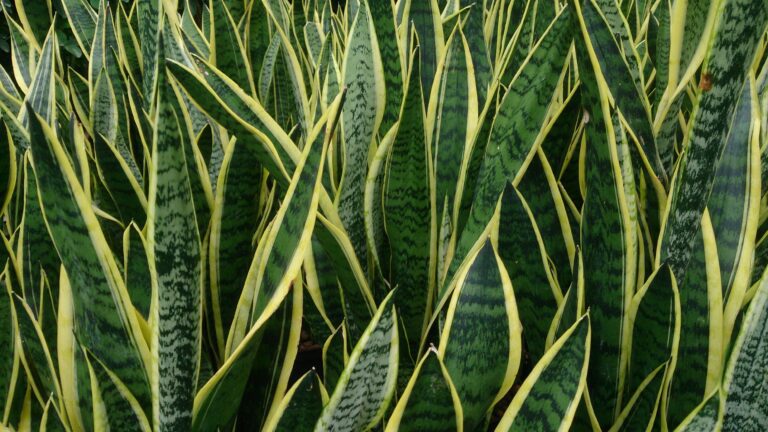
This is the plant I hand to anyone who tells me they cannot keep houseplants alive. Nine times out of ten, the real problem was not them. It was the plant. They tried a fiddle leaf fig. They got a calathea. They watched a TikTok about misting. Snake plants laugh at all of it.
Why Snake Plants Are Perfect for Black Thumbs
Most houseplants die from one thing: being loved too much. Overwatering is the leading cause of indoor plant death, and most forgiving plants are forgiving specifically because they tolerate drought better than your average species. Snake plants take this to an extreme.
Their thick, waxy leaves are water-storage organs. Each leaf is effectively a vertical reservoir. Underneath, a fat rhizome stores even more. A snake plant can sit in dry soil for four weeks in summer or two months in winter and look exactly the same on day one as on day fifty. That is not neglect tolerance. That is evolution.
Add to that: they handle low light better than nearly any other common houseplant, they rarely attract pests, they tolerate dry indoor air without complaining, and they are nearly impossible to underfeed. If you want a plant that rewards basic attention and punishes nothing except flooding, this is it.
In my experience, the only people who kill snake plants are the ones who water on a schedule instead of checking the soil. We will fix that below.
Quick Care Summary
| Parameter | Requirement |
|---|---|
| Light | Bright indirect preferred, tolerates low light |
| Water | Every 10 to 14 days (summer), every 3 to 4 weeks (winter) |
| Humidity | 30% to 50%, no special requirement |
| Temperature | 60°F to 80°F (15°C to 27°C) |
| Soil | Fast-draining succulent or cactus mix |
| Fertilizer | Balanced liquid, half-strength, monthly in spring/summer |
| Pet Safe | No — mildly toxic to cats and dogs (saponins) |
| Difficulty | 1 / 10 (beginner proof) |
Snake Plant Basics: Know What You Are Growing
The snake plant you bought at Home Depot is almost certainly Dracaena trifasciata. You may also see it labeled Sansevieria trifasciata, which was its official botanical name until 2017. Taxonomists moved the entire Sansevieria genus into Dracaena, but the nurseries are still catching up. Both names refer to the same plant.
It belongs to the family Asparagaceae, the same plant family that gives us asparagus, hostas, and agave. That agave relationship matters more than it sounds. Snake plants evolved in dry, rocky West African landscapes (primarily Nigeria and the Congo basin), where rain comes in bursts and then stops for weeks. Every care decision flows from that origin.
You will hear it called a lot of different names depending on who is talking:
- Mother-in-law’s tongue (the stiff, pointed leaves)
- Viper’s bowstring hemp (the leaf fibers are genuinely strong)
- Saint George’s sword (common in Portuguese-speaking regions)
- Devil’s tongue
- Good luck plant (in some Chinese feng shui traditions)
Every one of those names is the same plant. And every one of those names describes something a botanist would call hard to kill.
Snake Plant Varieties Worth Knowing
There are over seventy recognized Dracaena trifasciata cultivars, and more than a dozen are regularly sold as houseplants. Most big-box stores carry two or three. The differences matter because some varieties grow tall and narrow, others stay low and rosette-shaped, and a few look nothing like what you picture when you hear “snake plant.”
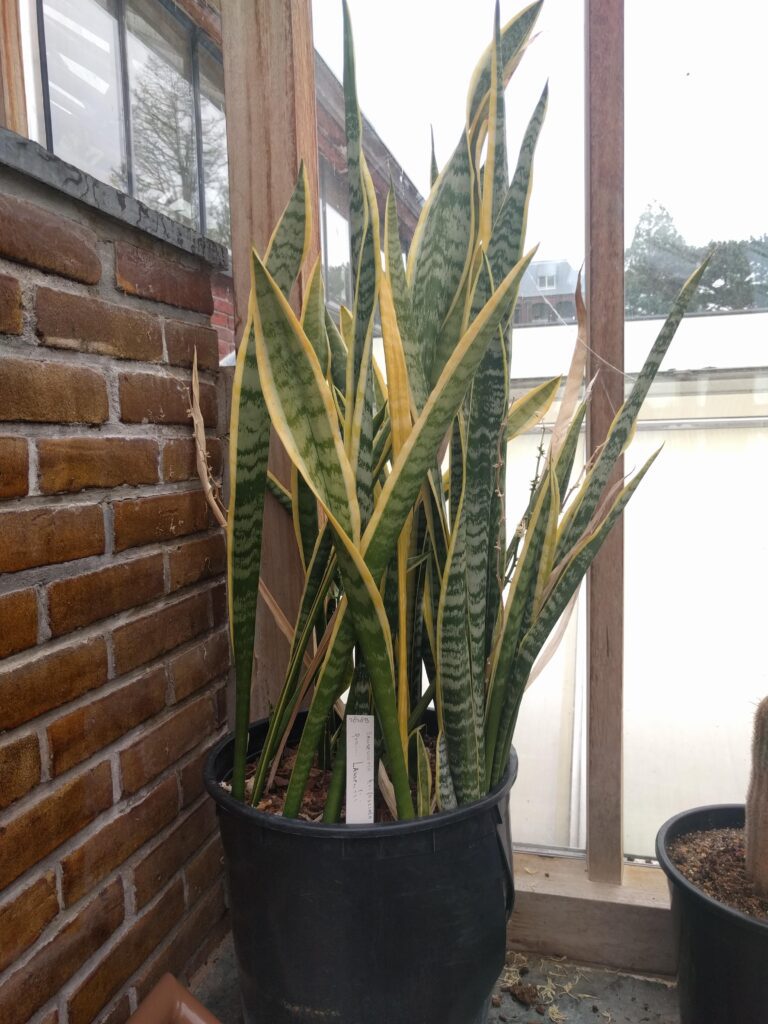
Laurentii
The classic. Tall, sword-shaped leaves with bright yellow edges and dark green centers striped with pale horizontal bands. This is the one you see in offices, airports, and your dentist’s lobby. Grows 2 to 4 feet tall indoors. If someone says “snake plant” without specifying, they almost always mean Laurentii.
Moonshine
Silvery, pale green leaves with almost no striping. Broader and shorter than Laurentii, rarely exceeding 2 feet. In bright light it stays ghostly silver. In lower light it darkens toward sage green. A shelf-sized variety, more decorative than architectural.
Cylindrica (African Spear)
Round, pencil-thick leaves that point straight up like green chopsticks. Sometimes sold braided. Easy to mistake for a completely different plant. Same care, same unkillable reputation.
Black Gold
Similar silhouette to Laurentii but with much darker, near-black green leaves and narrower golden edges. Dramatic in a minimalist white pot.
Hahnii (Bird’s Nest)
A compact dwarf. Tops out around 6 to 8 inches. Leaves form a tight rosette instead of pointing up. Perfect for desks, small shelves, and bathrooms.
For a deeper look at less common cultivars like Whitney, Futura Superba, and Bantel’s Sensation, see our full guide to snake plant varieties.
Light Requirements: Where to Put Your Snake Plant
The snake plant’s reputation as a “low light plant” is slightly misleading. It survives low light. It thrives in bright indirect light. If you want a plant that looks the same for three years, low light is fine. If you want one that produces new leaves, puts out offsets, and develops rich coloration, give it more.
The ideal placement
A spot 3 to 6 feet from an east-facing or south-facing window is the sweet spot. The plant gets several hours of bright, filtered light per day without the harsh midday sun that can scorch variegated leaves.
What it will tolerate
- North-facing windows: Fine. Slow growth, darker coloration.
- Windowless bathrooms or hallways: It will live, but expect almost no new growth.
- Under office fluorescents: Genuinely fine. Snake plants are one of the few houseplants that do well under standard office lighting.
- Full direct sun (outdoor or intense south window): Risky. Variegated cultivars like Laurentii can bleach or scorch. Plain green cultivars handle it better.
Signs it wants more light
Leaves start leaning toward the light source. New growth is smaller and paler than old growth. Variegation fades. Colors look muted. These are not emergencies, but they tell you the plant is working harder than it needs to.
Signs it is getting too much direct sun
Brown, papery patches on the outward-facing side of leaves. Leaves turning yellowish-green or bleached. Crispy edges. Move it back from the window by 2 or 3 feet.
If your apartment is on the darker side and you want your snake plant to actually grow, a basic LED grow light on a timer will do more for it than moving it around the apartment ever will. See our full indoor plant lighting guide for specifics.
Watering: The Most Important Thing to Get Right
Ninety percent of snake plant deaths come from watering. Specifically, from watering on a schedule instead of waiting for the plant to tell you it is ready.
Here is the actual rule: water a snake plant when the soil is completely dry at least two inches down. For most homes, this works out to once every 10 to 14 days in warmer months and once every 3 to 4 weeks in winter. But those numbers are averages, not commandments. Your pot size, your light, your humidity, and your soil mix all move the needle.
How to tell when it needs water
Three methods, in order of reliability:
- The finger test. Push your index finger two inches into the soil. If it feels dry to the touch and no soil clings to your finger, water. If the soil is cool and moist, wait.
- The weight test. Pick up the pot. A thoroughly dry snake plant pot feels surprisingly light. A freshly watered one feels heavy. After you water once and know what “heavy” feels like, you can skip the finger test most of the time.
- A moisture meter. A $10 soil moisture meter eliminates the guesswork. Push it into the soil. If it reads in the “dry” zone, water. If not, wait. Worth the cost if you have more than three plants.
How to actually water
Water thoroughly, then stop. That means: pour water slowly and evenly across the soil surface until you see it draining out the bottom of the pot. Let it drain fully (5 to 10 minutes), empty any saucer underneath, and leave the plant alone. Do not water again until the soil is dry two inches down.
Why overwatering kills snake plants
The rhizome (that fat underground stem) rots when it sits in wet soil. Rot is bacterial. Once it spreads into the rhizome, the plant is usually unsalvageable above a certain threshold. The visible symptoms (yellow leaves, mushy base, that sour smell) show up weeks after the rot started.
If you only remember one thing about snake plant care: when in doubt, do not water. The plant is built to wait. Your instinct to help will kill it faster than walking away for a month will.
For the full watering schedule across seasons, pot sizes, and cultivars, see our snake plant watering deep dive.
Soil and Potting
Do not use regular potting soil straight from the bag. Standard mixes hold too much moisture for too long, which is exactly the condition a snake plant’s rhizome cannot handle.
The right mix
Use a fast-draining succulent or cactus mix. If you want to build your own, here is a simple recipe that works every time:
- 2 parts standard indoor potting mix
- 1 part perlite (for airflow and drainage)
- 1 part coarse sand or pumice
The mix should feel gritty and loose, not dense and peaty. When you water, the water should drain through visibly within a few seconds.
Pot material
Terracotta is genuinely the best pot material for snake plants. The porous clay wicks moisture out of the soil, which is exactly what this plant wants. Plastic and glazed ceramic trap moisture longer. They are not deal-breakers (I have a snake plant in a plastic pot that has lived seven years), but terracotta gives you a bigger margin of error.
Drainage holes are non-negotiable
If the pot does not have a drainage hole, the plant will die. Full stop. You can use a decorative no-drainage pot as a cachepot (the plastic nursery pot sits inside it, lifted off the bottom), but the plant itself should always be in a pot that drains.
Pot size
Snake plants actively prefer being a little root-bound. Pick a pot that is only 1 to 2 inches wider than the root ball. Going bigger does not help. It just gives the soil more places to stay wet. Repot every 2 to 3 years, usually when roots start pushing up out of the soil or circling the bottom.
Fertilizing Your Snake Plant
Snake plants need very little fertilizer. In their native West African habitat, the soil is nutrient-poor. They are evolved to extract what they need from nearly nothing.
What to use
A balanced liquid houseplant fertilizer (roughly 10-10-10 NPK) diluted to half the strength the bottle recommends. Or a dedicated succulent fertilizer, which tends to be lower in nitrogen.
How often
Once a month during spring and summer. Skip fall entirely. Do not fertilize in winter, when the plant is dormant and not using nutrients. Over-fertilizing is more damaging than under-fertilizing. Salt buildup causes brown leaf tips and can burn the rhizome.
If in doubt, skip it
A snake plant that has never been fertilized will still grow, slowly, for years. A snake plant that has been fertilized every two weeks will get chemical burn. The asymmetry should tell you which way to err.
How to Propagate Snake Plants
Snake plants are one of the easier houseplants to multiply. Three methods work reliably. Each has trade-offs.
Division (fastest, highest success rate)
When you repot a mature snake plant, you will see separate clumps of leaves emerging from connected rhizomes. These can be separated into individual plants. Slide the plant out of the pot, gently pull the clumps apart or cut connecting rhizome sections with a clean knife, and pot each division separately. Water lightly after 3 to 4 days to let cuts callus over.
Leaf cuttings in soil
Cut a healthy leaf into 3- to 4-inch sections (remember which end points up, cuts heal by orientation). Let the cuts dry and callus for 24 to 48 hours. Plant each section upright, cut-end down, about 1 inch deep in a small pot of succulent mix. Keep barely moist. Roots form in 2 to 6 weeks, new leaves in 2 to 4 months.
Leaf cuttings in water
Same approach, but stand the callused cuttings in a glass of water with the cut end submerged about half an inch. Change the water weekly. Roots develop in 3 to 8 weeks. Transplant to soil once roots are 2 inches long.
A warning about variegated varieties: if you propagate a Laurentii from leaf cuttings, the baby plants will revert to solid green. The yellow variegation is unstable and does not pass through leaf tissue. To keep the yellow edges, you must propagate by division. This is the number one surprise new propagators run into.
For the full step-by-step with photos, timing charts, and success-rate data, see the snake plant propagation guide.
Common Snake Plant Problems
Most snake plant problems trace back to one of four root causes. In roughly this order of frequency:
Yellow leaves
Usually overwatering, sometimes sunburn, rarely nutrient deficiency. Check the soil first. If it is wet and the base of the plant feels soft, you have early root rot. Remove the plant, cut away any mushy tissue with a sterilized blade, let everything dry for two days, and repot in fresh dry soil. Do not water for a week. Full breakdown in the yellow leaves troubleshooting guide.
Curling or wrinkled leaves
Counterintuitively, this is usually underwatering. Yes, a snake plant can be underwatered. Its leaves lose their crisp vertical posture and develop a wavy, soft fold down the center. Water thoroughly. The plant will plump back up over 48 to 72 hours. If leaves are curling and the soil feels wet, the problem is root damage, not thirst.
Drooping leaves
Healthy snake plant leaves point straight up. Drooping outward means one of three things: the plant needs a bigger or deeper pot for support, it is getting too little light and stretching, or (most commonly) the rhizome is damaged by rot.
Root rot
The nuclear scenario. Base feels mushy, leaves yellow or fall over, foul smell when you unpot. If less than half the rhizome is affected, you can often save the plant by cutting out rotten tissue and repotting. Beyond that threshold, start over with cuttings from the healthy leaves.
Pests
Snake plants rarely get pests, but they are not immune. The usual suspects are mealybugs (cottony white clumps in leaf joints), spider mites (fine webbing, tiny specks, more likely in dry air), and scale (brown, shell-like bumps on leaves). All three respond to thorough wiping with a cotton pad dipped in 70% isopropyl alcohol. Repeat weekly until gone.
Is Snake Plant Toxic to Pets?
Yes. Snake plants are mildly toxic to cats and dogs, and listed as such by the ASPCA. The toxic compounds are saponins, which are found throughout the leaves and rhizome.
What happens if a pet eats one
Symptoms typically include drooling, nausea, vomiting, and occasionally diarrhea. In most cases the reaction is uncomfortable but not life-threatening. Severe reactions are rare and usually involve a small or very young animal eating a large quantity.
What to do if it happens
Call your vet or the ASPCA Animal Poison Control Center at 888-426-4435 (a consultation fee may apply). Do not induce vomiting unless specifically told to. Keep the animal calm and hydrated.
Safer alternatives if you have curious pets
If your cat or dog is a known plant-chewer, consider one of these non-toxic alternatives with a similar architectural look:
- Parlor palm (Chamaedorea elegans)
- Areca palm (Dypsis lutescens)
- Ponytail palm (Beaucarnea recurvata)
- Spider plant (Chlorophytum comosum)
See our full pet-safe houseplants guide for vet-approved options.
Styling and Placement Ideas
Snake plants are one of the most architecturally versatile houseplants because the varieties come in such different silhouettes.
As a floor plant
A tall Laurentii or Black Gold in a 10- to 12-inch pot makes a strong vertical statement. Put it in an entryway corner, next to a sofa arm, or flanking a doorway. The vertical leaves read as “sculpture” more than “plant,” which is why designers love them.
On shelves and side tables
Hahnii and Moonshine are made for this. Their compact, contained shape looks intentional on a bookshelf, bathroom counter, or desk. Use a 4- to 6-inch pot.
In bathrooms
Snake plants handle the humidity swings and tolerate low light, so a windowless bathroom is genuinely fine for them, especially smaller cultivars. Put them on a shelf where the occasional steam bath will not splash the leaves.
In home offices
The plant that handles office fluorescents without complaint. Pair with a matte ceramic pot in a neutral tone for a “I care about my space” signal without any actual effort.
What not to pair them with
Avoid placing snake plants next to heavy-misting-required neighbors like calatheas and ferns. Their needs are opposite. One will get overwatered out of sympathy for the other.
Where to Buy a Healthy Snake Plant
You can find snake plants almost anywhere plants are sold, but the quality varies more than people realize. Here is what to look for and avoid.
Good sources
- Local independent nurseries. Usually the best quality, grown by people who know the plants.
- Online specialists (The Sill, Bloomscape, Pistils Nursery, Planterina). Higher prices, but plants arrive well-packaged and the selection covers rarer cultivars.
- Big-box stores (Home Depot, Lowe’s, IKEA). Fine for common varieties, hit-or-miss on care during transport. Inspect carefully.
What a healthy snake plant looks like
- Leaves pointing upward, firm to the touch, no soft spots
- No yellowing at the base or tips
- No white fuzzy patches (mealybugs) or webbing (spider mites)
- Soil slightly dry, not soggy
- The pot feels reasonably heavy (roots are developed)
Warning signs
- Wrinkled or curled leaves (underwatered, but can recover)
- Mushy leaf base (root rot, hard to recover)
- Leaves that wiggle easily when tugged (rhizome is rotting or disconnected)
- Strong sour or chemical smell from the soil
If you are buying online, read the shop’s packaging and return policies before ordering. Reputable sellers guarantee arrival condition and will replace plants damaged in transit.
Year-Round Snake Plant Care Calendar
Snake plants do not need much, but the little they need changes with the seasons. Most killed snake plants get watered on a summer schedule in winter, which is the single most common timing mistake.
Spring (March to May)
Growth resumes as daylight lengthens and temperatures rise. Water slightly more often, roughly every 10 to 12 days once soil is dry two inches down. Start fertilizing at half strength, once a month. This is the best season to repot or propagate.
Summer (June to August)
Peak growth. Water every 10 to 14 days. Continue monthly fertilizing. If the plant is near a south-facing window, move it back 2 to 3 feet to avoid leaf scorch from high summer sun. Dust the leaves with a damp cloth once a month to keep photosynthesis efficient.
Fall (September to November)
Growth slows as light decreases. Stretch watering to every 2 to 3 weeks. Skip the last fertilizer application in September. Move plants away from exterior windows if cold drafts or heating vents are nearby, both of which cause leaf damage.
Winter (December to February)
Dormancy. Water every 3 to 4 weeks, sometimes less. Do not fertilize. Do not repot. Keep temperatures above 55°F (13°C). If leaves start looking wrinkled and soil has been dry for four weeks, give a light drink. If they look bleached and papery, check for cold damage from a nearby window.
A snake plant that survives its first winter under your care will almost always survive every winter after. The plant is learning your home as much as you are learning it.
Frequently Asked Questions
How long do snake plants live?
With decent care, 20 to 25 years is not unusual. Heirloom specimens in offices and restaurants routinely live longer. They grow slowly, so a snake plant in a household for a decade may only have doubled in height.
Do snake plants really purify air?
Yes and no. NASA’s 1989 Clean Air Study found that snake plants do remove certain indoor air pollutants (formaldehyde, benzene, trichloroethylene) in a sealed laboratory chamber. However, follow-up research has shown the effect at normal household plant-to-room ratios is negligible. They do a tiny amount of air filtering, but you would need hundreds of plants to notice in a typical home. Buy one because you want a plant. The air-purification headlines were oversold.
Can snake plants grow in water only?
They can root and live in water (hydroponic snake plants are a real thing), but they will not produce the rich leaf growth you get in soil, and they are more vulnerable to root rot if the water becomes stagnant. If you want to try it, keep the water changed weekly and use a wide-mouth vase so the plant gets airflow.
Why is my snake plant not growing?
Most likely it is perfectly healthy and you are expecting too much. Snake plants grow slowly by design. A mature plant might put out 2 to 4 new leaves per year. Faster growth requires more light (bright indirect or a grow light), warmer temperatures (above 70°F), and monthly fertilizing in the growing season. If it has been two full years with zero new leaves, check that the roots are not bound in a pot much too small or rotting in one too large.
Do snake plants flower?
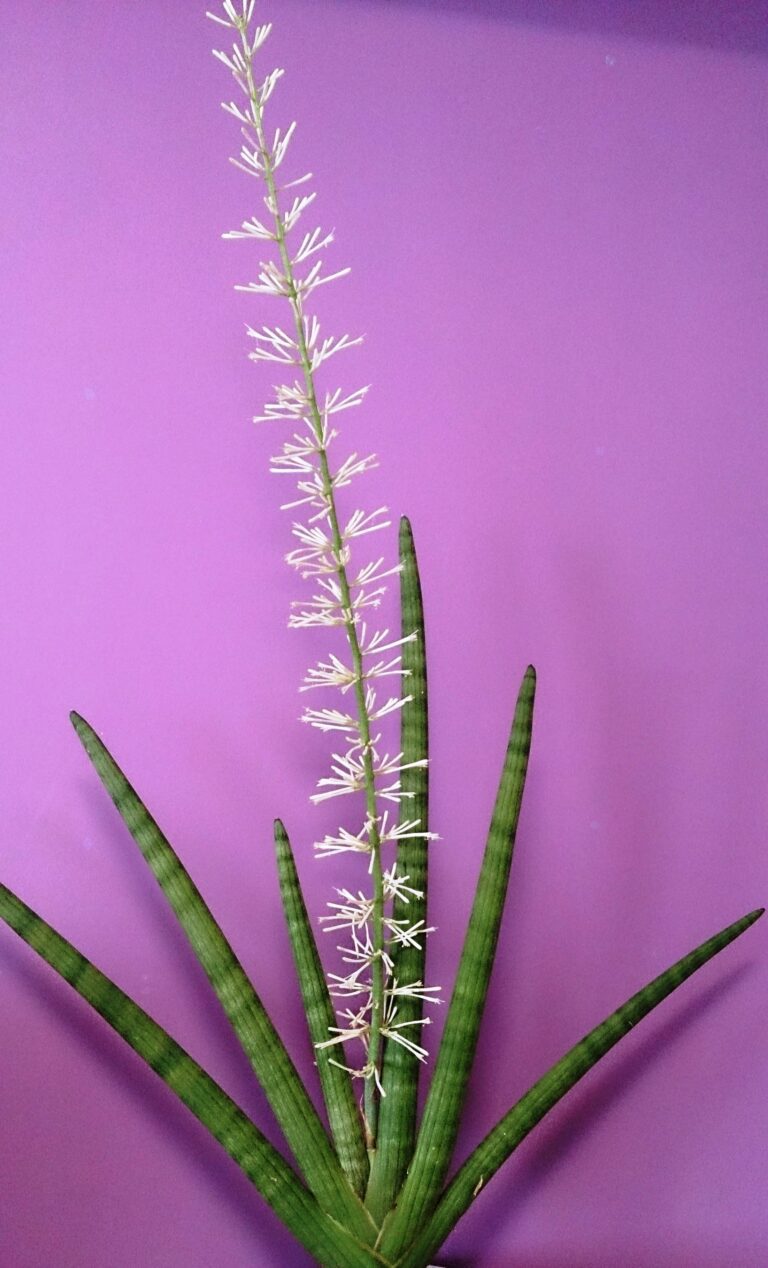
Yes, though rarely indoors. When they do, they produce tall, narrow flower spikes with small, cream-colored flowers that smell faintly sweet at night. Flowering tends to happen when the plant is slightly stressed and root-bound. Enjoy it if it happens, but do not plan your houseplant hobby around it.
Final Thoughts
Snake plants are the closest thing houseplant culture has to a guaranteed win. If you have killed plants before and are cautious about trying again, start here. Get one. Put it in a terracotta pot with well-draining soil. Water it when the soil is dry two inches down, not before. Leave it alone between waterings. That is the entire job.
Once you have kept a snake plant alive for six months, you have built most of the instinct you need for every other hard-to-kill houseplant. From here, pothos is a logical next step (vines instead of swords, similar forgiveness), and ZZ plants round out the “absolutely indestructible” trio.
For more in that direction, see our complete guide to hard-to-kill houseplants and our beginner’s guide to indoor plants. If you already have a snake plant and something is off, jump to the yellow leaves troubleshooting page or the snake plant watering guide.
You can do this. The plant is on your side.
More Snake Plant Guides
Deep-dive guides for specific aspects of snake plant care.
- 10 Stunning Snake Plant Varieties You Need to Know
- How Often to Water a Snake Plant: The Complete Schedule
- Snake Plant Propagation: 3 Foolproof Methods (Step-by-Step)
- Snake Plant vs ZZ Plant: Which Is Right for You?
- Snake Plant Yellow Leaves: 7 Real Causes (And Fixes)
- Why Are My Snake Plant Leaves Curling? 6 Real Causes
See also: snake plant sunburn guide.