
A ZZ plant is the plant you buy when you have a north-facing hallway, a demanding job, and absolutely no time to think about anything green for the next six weeks. It is not a low-maintenance plant. It is a no-maintenance plant. If you can walk past it once a month and remember to water it, you will have a thriving ZZ plant for twenty years.
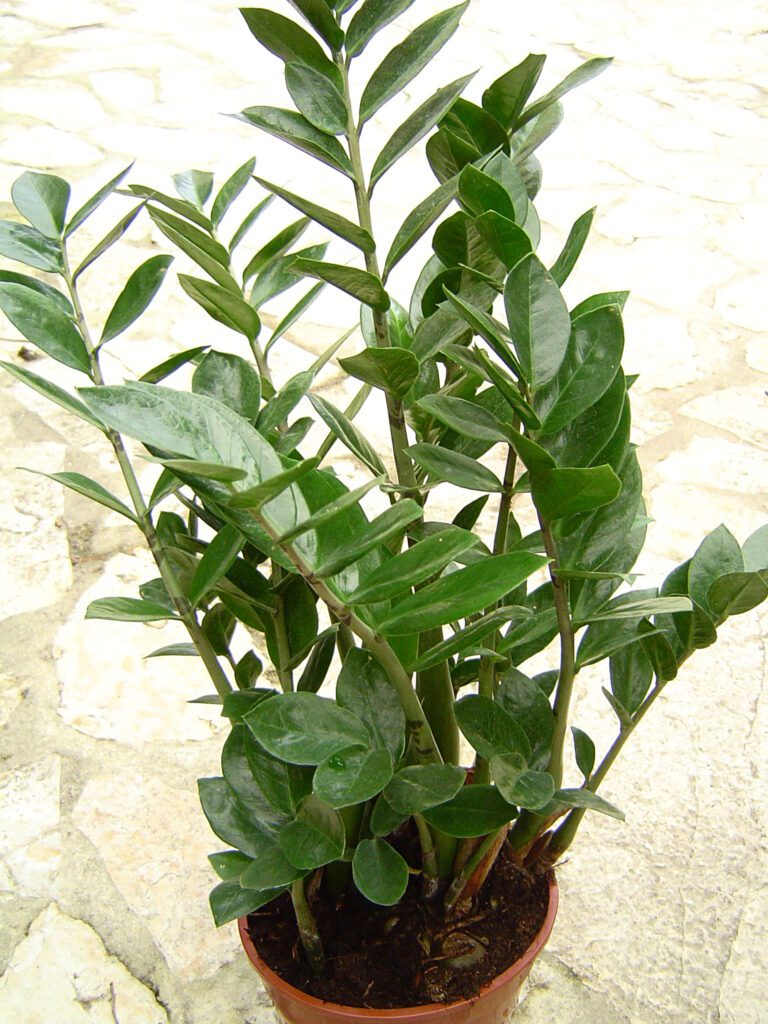
ZZ plants are architectural, glossy, slow, and nearly indestructible. They are the reason every modernist office lobby looks identical. They are also the plant I recommend to people who have killed both snake plants and pothos, because somehow ZZ plants survive even them.
Why ZZ Plants Are Perfect for Black Thumbs
The ZZ plant’s entire survival strategy is stored underground. Each plant grows from a cluster of potato-like rhizomes (technically tubers) that hold water, carbohydrates, and growth energy. When conditions get harsh (drought, darkness, cold), the plant draws from these reserves and simply waits. A mature ZZ plant can go months without water and show no visible stress.
Above ground, its glossy, waxy leaves reduce water loss further. The wax is so pronounced that many people think their ZZ plant is fake the first time they see one. That thick cuticle is not decoration; it is the outer half of a drought-evolution strategy matched by almost no other common houseplant.
The practical result: ZZ plants survive vacations, forgotten care, accidental moves to closets, and the general chaos of human life better than nearly anything else you can keep indoors. A ZZ plant does not need you. It tolerates you. That asymmetry is exactly why it works.
In my experience, the only way to kill a ZZ plant is to water it on a weekly schedule. Almost everyone who kills one did it by being too attentive, not too neglectful.
Quick Care Summary
| Parameter | Requirement |
|---|---|
| Light | Bright indirect preferred, tolerates very low light |
| Water | Every 2 to 3 weeks (summer), every 3 to 6 weeks (winter) |
| Humidity | Any level, no special needs |
| Temperature | 60°F to 75°F (15°C to 24°C) |
| Soil | Well-draining potting mix with perlite or cactus mix |
| Fertilizer | Balanced liquid, half-strength, every 2 months in spring/summer |
| Pet Safe | No — toxic to cats and dogs (calcium oxalates) |
| Difficulty | 1 / 10 (beginner proof) |
ZZ Plant Basics: Know What You Are Growing
The ZZ plant’s full scientific name is Zamioculcas zamiifolia, a mouthful that explains the “ZZ” shorthand. It is the only species in the Zamioculcas genus, which puts it in the family Araceae, alongside pothos, monstera, philodendron, peace lily, and ZZ’s closer relatives like anthurium and caladium.
The plant is native to eastern Africa, specifically the dry grasslands and rocky forests of Kenya, Tanzania, and the island of Zanzibar (the origin of its nickname “Zanzibar Gem”). In its native habitat, ZZ plants grow through dry seasons lasting six months or more, which is exactly where their extreme drought tolerance comes from.
Though grown as a houseplant for decades in Europe, ZZ plants only became widely available in North American markets in the 1990s after Dutch growers began mass-propagating them commercially. Their explosion in popularity through the 2000s and 2010s tracks almost exactly with the rise of minimalist interior design, which is not a coincidence; nothing else fits “glossy black planter, white wall” aesthetic so perfectly.
Common names you may see:
- Zanzibar Gem
- Eternity Plant (for its resilience)
- Aroid Palm (it vaguely resembles a palm, but it is not one)
- Emerald Palm
- Fortune Tree (in Chinese feng shui, associated with wealth)
All of these refer to Zamioculcas zamiifolia. There are no close relatives sold as houseplants, so “ZZ plant” almost always means exactly one species.
ZZ Plant Varieties Worth Knowing
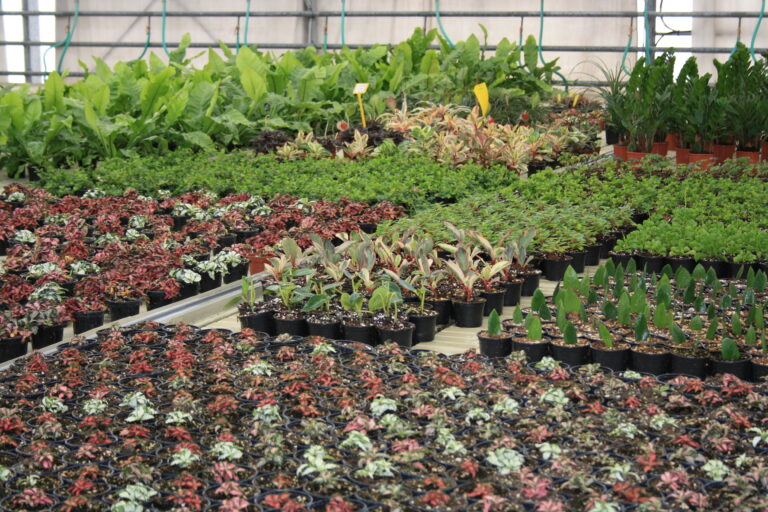
Unlike snake plants or pothos with dozens of named cultivars, ZZ plants have relatively few varieties on the commercial market. The most common options:
Standard (Zamioculcas zamiifolia)
The classic green ZZ. Glossy, deep green leaflets on upright, slightly arching stems. Grows 2 to 3 feet tall over several years. This is what you get in almost any big-box store.
Raven ZZ
A newer, patented variety (released in 2019) that grows with bright green new leaves that mature into deep purple-black. A mature Raven is one of the most dramatic-looking houseplants you can buy, appearing nearly black indoors. Care is identical to standard ZZ. Prices are 2 to 4 times higher than regular ZZ plants and it is slightly slower-growing.
Zenzi
A compact cultivar with tightly clustered, curled leaves. Stays under 18 inches tall even at maturity. Ideal for shelves and desks where a full-size ZZ would be too tall. Identical care, but because the leaves are tightly packed, it needs slightly more airflow to avoid fungal issues.
Variegated ZZ
A rare cultivar with irregular cream or yellow streaking on green leaves. Slower-growing than all other varieties (variegated tissue has less chlorophyll) and significantly more expensive. Needs brighter light than standard ZZ to maintain the variegation. Difficult to find and often costs $80 to $300 for a small specimen.
Lucky White ZZ
An even rarer ghostly-pale variety with white or cream-dominated foliage. Extremely slow, very expensive, and considered a collector’s plant. Not recommended for beginners.
For most people, standard green ZZ or Raven are the best choices. Start with green if you are new to the plant; try Raven once you know how it grows and want the drama.
Light Requirements: Where to Put Your ZZ Plant
ZZ plants are the reigning champions of low-light tolerance among common houseplants. They survive conditions that kill almost every other species. But like most “low-light tolerant” plants, they grow fastest and look best in bright indirect light.
The ideal placement
About 4 to 8 feet from an east or south-facing window, or in any room with full daylight reaching the space. ZZ plants in bright indirect light grow 2 to 4 new stems per year and develop deeper color.
What it will tolerate
- North-facing rooms: Thrives. Growth is slower but consistent.
- Interior offices and hallways: One of the few houseplants that genuinely survives with only overhead fluorescent or LED light for months at a time.
- Windowless rooms: Will live for several months without natural light, but will eventually slow to a halt. If keeping in windowless space long-term, rotate with another plant from a brighter room every few months, or add a basic grow light.
- Direct sun: Leaves will scorch, especially on Raven ZZ. Keep out of direct afternoon sun.
Signs your ZZ wants more light
Very slow or no new growth for a year. Stretched stems with exaggerated gaps between leaflets. Pale or yellowish-green coloration in a plant that used to be darker. Leaflets that look flat and dull instead of glossy.
Signs of too much direct light
Bleached patches on outward-facing leaves. Crispy edges on leaflets. Stems leaning or flopping away from the light source. Move back from the window or add a sheer curtain to diffuse the light.
For a deeper understanding of what “bright indirect light” actually means for indoor plants, read our indoor plant lighting guide.
Watering: The One Thing You Can Really Mess Up
If you kill a ZZ plant, you did it by overwatering. There is almost no other way. The plant is so drought-tolerant that a moderately forgetful owner cannot harm it by neglect, but a diligent over-attentive one can drown it in weeks.
The rule: water only when the soil is completely dry all the way through. For a 6-inch pot in moderate conditions, this is every 2 to 3 weeks in summer and every 3 to 6 weeks in winter. For larger pots, the cycle is even longer. Skip watering entirely if you are not sure. The plant will tell you if it is actually thirsty.
How to check
- The finger test. Push your finger 2 to 3 inches into the soil. If any part feels cool and damp, wait. Water only when the soil is dry throughout.
- The weight test. A thoroughly dry ZZ pot feels surprisingly light because the rhizomes themselves store most of the water. Once you have weighed both a dry and fresh-watered pot, you can judge by heft alone.
- A moisture meter. For ZZ plants specifically, a $10 moisture meter is worth the investment because the plant’s slow visible response to overwatering means the damage is usually done before symptoms appear above ground.
How to water correctly
Water thoroughly, then stop. Pour water slowly across the soil surface until it runs freely from the drainage holes. Empty any standing water from the saucer. Walk away. Do not water again until the soil is dry throughout, which will take weeks, not days.
The signs of overwatering
Yellow stems at the base. Mushy tissue at the soil line. A sour or fermented smell from the pot. Individual leaflets dropping off healthy-looking stems. Stems falling over at the base.
By the time you see these symptoms, the rhizome has likely started to rot. Remove the plant from the pot, cut away any soft or blackened rhizome tissue, let the healthy parts dry in open air for 48 hours, and repot in fresh dry soil. Do not water for 10 days. If more than half the rhizome is rotten, the plant is probably beyond saving.
Underwatering (rarely the actual problem)
A severely underwatered ZZ plant loses leaflets, starting with the oldest ones nearest the base. Stems become slightly wrinkled. This is almost never why a ZZ plant looks sad; overwatering is the cause 95% of the time. Water normally and stop worrying.
For a full deep-dive on ZZ plant watering across different pot sizes, rhizome maturity, and seasonal adjustments, see our ZZ plant watering guide.
Soil and Potting
Drainage and soil composition are the most important decisions for a ZZ plant. Get these right and the plant forgives nearly everything else. Get them wrong and no amount of careful watering will save you.
The right mix
A fast-draining soil is non-negotiable. Build your own with:
- 2 parts indoor potting soil
- 1 part perlite
- 1 part coarse sand or pumice (optional, adds extra weight and drainage)
Or buy a ready-made cactus and succulent mix, which works perfectly for ZZ plants out of the bag. Avoid moisture-retaining mixes labeled for tropicals, African violets, or “thirsty plants.” Those hold water for days and will rot the rhizomes.
Pot material
Terracotta is the best pot material for ZZ plants because its porous clay wicks moisture. This gives you a margin of error on overwatering. Glazed ceramic and plastic work too, but you will need to be more careful with watering frequency. Metal pots trap heat and moisture; avoid them.
Drainage holes are mandatory
A ZZ plant in a pot without drainage holes is a ZZ plant on death row. No exceptions. If you love a decorative pot without a hole, use it as a cachepot: keep the plant in a plastic nursery pot and lift it out to water, then return it once fully drained.
Pot size
ZZ plants prefer being slightly root-bound (the rhizomes actually benefit from some compression). When repotting, go only 1 to 2 inches wider. A pot much larger than the root mass holds excess wet soil that the plant cannot access, which becomes a rot hazard. Repot every 2 to 3 years, or when you see rhizomes pushing up against the edges of the pot or breaking the soil surface.
Fertilizing Your ZZ Plant
ZZ plants need very little fertilizer. They evolved in nutrient-poor African soils and are extremely efficient with what they have. Over-fertilizing is far more damaging than skipping fertilizer altogether.
What to use
A balanced houseplant fertilizer (10-10-10 or 20-20-20) diluted to half strength. Or a dedicated succulent/cactus fertilizer, which is typically formulated at lower concentrations.
How often
Every 2 months during spring and summer. That is it. Do not fertilize in fall. Do not fertilize in winter. If you forget a feeding, no harm done; ZZ plants grow fine with no fertilizer at all.
Signs of over-fertilizing
Brown or crispy leaflet tips. White crust on the soil or terracotta surface. Sudden yellowing without overwatering symptoms. These indicate salt buildup from excess fertilizer.
Fix by flushing the soil with plain water (let water run through the pot for 2 to 3 minutes) and skipping fertilizer for 3 to 4 months.
How to Propagate ZZ Plants
ZZ plants can be propagated, but it takes patience measured in months, not weeks. Three methods work, with very different timelines and success rates.
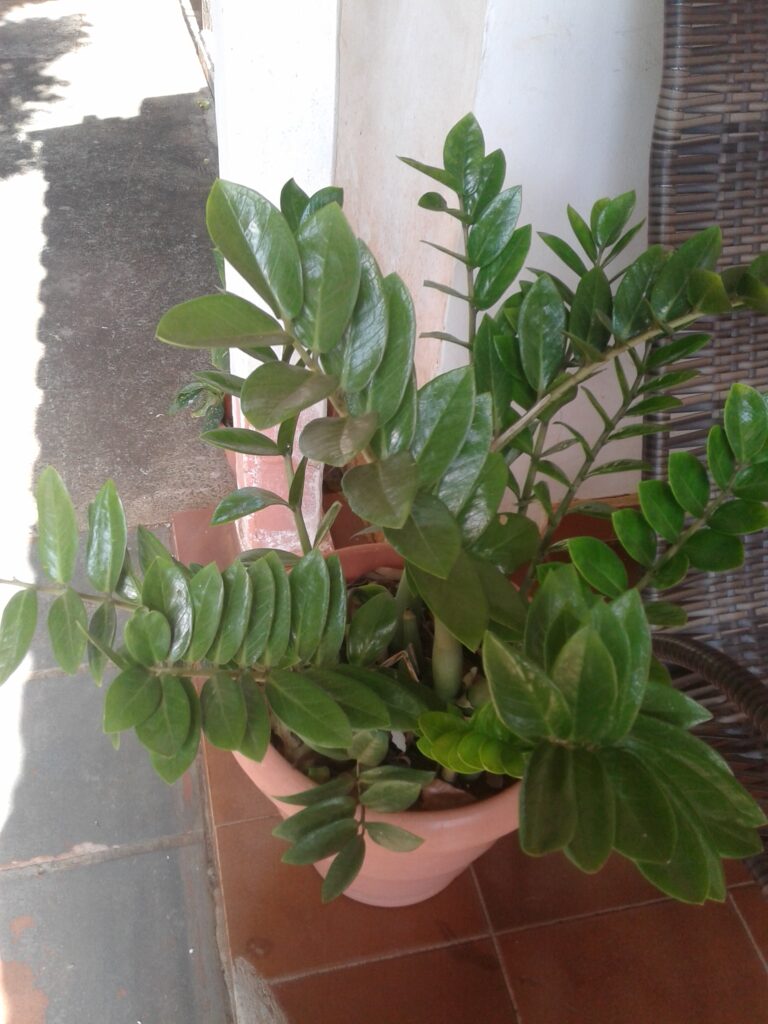
Division (fastest and most reliable)
When repotting a mature ZZ plant, you will see multiple rhizomes, each with its own cluster of stems. These can be separated into individual new plants. Carefully slide the plant out of the pot, shake off loose soil, and gently pull or cut connected rhizomes apart with a sterilized knife. Each division needs at least one healthy rhizome and one stem. Let cut surfaces dry for 24 hours before repotting. Water lightly after 5 to 7 days. Each division becomes a full plant in 6 to 12 months.
Leaf cuttings (slowest, but easiest to start)
Pluck individual leaflets from a stem (or cut them with scissors). Let the cut end callus for 24 hours. Place the leaflets in a small pot of moist potting mix, cut-end down, about half an inch deep. Keep in bright indirect light. Water minimally: the soil should be barely damp, never wet. New rhizomes form under the soil after 3 to 9 months. A new stem emerges from the rhizome 6 to 18 months later. Patience is the main requirement.
Stem cuttings in water (also slow)
Cut a full stem near the base of the plant. Place in a glass of water with the cut end submerged about 2 inches. Change the water weekly. A small rhizome forms at the base of the cutting in 3 to 8 months. Once the rhizome is about an inch in diameter, transplant to soil. This method is the most visually satisfying because you can watch the rhizome form, but it is the slowest.
A word of warning
ZZ plant sap contains calcium oxalate crystals that can irritate skin and eyes. Wear gloves when cutting stems or separating rhizomes, and wash hands thoroughly after. Keep cuttings away from children and pets.
For the full step-by-step with success rate data and timing charts, see our ZZ plant propagation guide.
Common ZZ Plant Problems
ZZ plants have remarkably few problems compared to other houseplants. Four issues account for nearly all complaints.
Yellow stems or leaflets
Almost always overwatering. Check the soil first. If it is wet, hold off on watering and let the pot dry out fully (2 to 4 weeks in some cases). Remove yellow stems at the base with clean scissors. If yellowing continues to spread, the rhizome is rotting and needs surgical attention. Full diagnostic flow in our ZZ yellow leaves guide.
Leaflets dropping off
Single leaflets occasionally fall; this is normal. Multiple leaflets dropping from multiple stems in one week indicates a problem, usually overwatering (most common) or severe underwatering (rare). Inspect the rhizomes by gently loosening the soil around the base.
Stems flopping or leaning
Too much weight on aging stems (normal), too little light causing stretching (common), or rhizome rot (serious). If stems can be pushed gently and feel firm at the base, the plant is fine. If the base feels soft or wiggles easily, check for rot.
Slow or no growth
Usually a lighting issue. A ZZ plant in very low light grows about one new stem every 1 to 2 years. Move to brighter indirect light (or add a grow light) and growth accelerates noticeably within a few months. Slow growth is not a disease; it is the default for this plant.
Pests
ZZ plants rarely attract pests, but occasionally get mealybugs in leaf axils or spider mites on leaflets, especially in dry winter air. Treatment is the same as for any houseplant: wipe affected areas with 70% isopropyl alcohol on a cotton pad, repeat weekly for 3 weeks. For heavy infestations, use insecticidal soap.
Is ZZ Plant Toxic to Pets?
Yes. ZZ plants are toxic to cats and dogs, and listed as such by the ASPCA. The active compounds are calcium oxalate crystals, present throughout the plant, particularly in the stems and leaves.
What happens if a pet chews on ZZ
The sharp calcium oxalate crystals cause immediate oral pain, drooling, vomiting, and in some cases throat swelling. Most pets stop chewing quickly because of the burning sensation, which limits how much they ingest. Severe reactions are uncommon but possible with small animals or large ingestions.
What to do if it happens
Rinse the pet’s mouth with water to flush any remaining crystals. Call your vet or the ASPCA Animal Poison Control Center at 888-426-4435. Do not induce vomiting. Watch for throat swelling or breathing difficulty, both of which need immediate veterinary attention.
There is an old myth you should ignore
You may have seen online claims that ZZ plants are “so toxic they cause cancer” or “need to be handled with gloves because the air around them is dangerous.” This is false. ZZ plants are mildly to moderately toxic if ingested, same category as pothos and philodendron. They are safe to keep in the home and safe to touch without gloves (though gloves are smart when propagating to avoid sap irritation). The cancer claim traces to a mangled 1999 report on African tuber compounds and has no basis.
Safer alternatives
If your pet is a chewer, consider non-toxic alternatives with a similar architectural look:
- Parlor palm (Chamaedorea elegans)
- Ponytail palm (Beaucarnea recurvata)
- Cast iron plant (Aspidistra elatior)
- Boston fern
See our complete pet-safe houseplants guide for vet-approved picks.
Styling and Placement Ideas
ZZ plants are one of the most photogenic houseplants because their glossy leaves and upright form photograph beautifully and pair with almost any decor style.
As a floor plant
A mature ZZ plant in an 8- to 10-inch pot makes a striking statement in a corner, next to a sofa, or in an entryway. The upright wand-like stems fill vertical space without crowding a room.
On shelves and side tables
A small standard ZZ or Zenzi variety in a 4- to 6-inch pot is ideal for bookshelves, desks, and console tables. The glossy leaves catch light from any direction.
Modern and minimalist interiors
ZZ plants are the unofficial mascot of minimalist design. A black Raven ZZ in a white pot, or a standard green ZZ in a matte black pot, looks intentional in nearly any modern space.
Offices and low-light rooms
The ZZ plant’s tolerance of fluorescent light and neglect makes it the default office plant. If you want a single houseplant to survive months of weekends and holidays in a closed office, this is the species.
What to avoid
Do not place ZZ plants in heavily humid spaces like steamy bathrooms; they prefer drier conditions. Do not put them next to heating vents or on windowsills where they get direct afternoon sun.
Year-Round ZZ Plant Care Calendar
ZZ plants need almost nothing, but small seasonal adjustments keep them looking their best and prevent the most common cause of death: watering too often in winter.
Spring (March to May)
Growth resumes as daylight increases. Water when the soil is completely dry, typically every 2 weeks. Begin fertilizing at half strength every 2 months. Best time of year to repot or propagate.
Summer (June to August)
Peak (though still slow) growth. Water every 2 to 3 weeks. Continue light fertilizing every 2 months. Wipe leaflets with a damp cloth to remove dust and maintain the glossy finish.
Fall (September to November)
Growth slows visibly. Extend watering to every 3 to 4 weeks. Skip all fertilizer from September onward. Move plants away from drafty windows and cold exterior walls.
Winter (December to February)
Near dormancy. Water every 4 to 6 weeks, sometimes less. Do not fertilize. Do not repot. Keep temperatures above 55°F (13°C). Reduce watering significantly; winter overwatering kills more ZZ plants than any other mistake.
Where to Buy a Healthy ZZ Plant
ZZ plants are widely available, but quality varies by source. Here is what to look for.
Good sources
- Local independent nurseries. Typically best quality, especially for larger specimens. Knowledgeable staff can identify healthy rhizomes.
- Online specialists (The Sill, Bloomscape, Costa Farms direct): Well-packaged, healthy plants, slightly premium pricing.
- Big-box stores (Home Depot, IKEA, Costco): Widely available, prices lower than specialists, but plants may have been overwatered in-store. Inspect carefully.
What a healthy ZZ plant looks like
- Stems upright and firm, not leaning or flopping
- Leaflets glossy, deep green (or deep purple-black for Raven)
- No yellowing stems or leaflets
- No mushy spots near the soil line
- Pot feels relatively light (dry soil)
- No white fuzz, webbing, or brown bumps indicating pests
Warning signs
- Yellow stems, especially at the base
- Wrinkled or wilted-looking stems (advanced underwatering, recoverable)
- Mushy base when gently pressed (root rot, hard to recover)
- Soil soaking wet (was overwatered in-store)
- Strong smell from the soil (decomposition)
Expect to pay $15 to $40 for a 6-inch standard ZZ, $40 to $80 for an 8-inch, and $60 to $200 for a Raven ZZ in similar sizes. Variegated and rare cultivars run $100 to $500 or more.
Frequently Asked Questions
How long do ZZ plants live?
With proper care, ZZ plants can live 10 to 20 years or longer. Mature plants in good conditions become more impressive each year, producing larger rhizomes, thicker stems, and gradually filling a pot. Divisions from an original plant extend the effective lifespan indefinitely.
Do ZZ plants purify air?
Partially. ZZ plants were included in follow-up studies to NASA’s 1989 Clean Air Study and shown to remove some indoor pollutants including xylene, toluene, and benzene. The effect at normal household plant density is minimal. Buy one for its appearance and ease, not as an air-quality solution.
Can ZZ plants grow in water only?
They can, but reluctantly. A ZZ cutting with its rhizome can live in water for years if the water is changed every week or two and diluted fertilizer is added occasionally. Growth is much slower than in soil and the plant stays small. A ZZ in water is more of a curiosity than a thriving plant.
Why is my ZZ plant not growing?
ZZ plants grow extremely slowly by design. A healthy plant in moderate light produces only 1 to 3 new stems per year. If yours has not put out any new growth in 2 years, the cause is almost always insufficient light. Move to a brighter spot or add a basic LED grow light and expect to see new growth within 3 to 6 months.
Does the ZZ plant flower?
Rarely indoors, but yes. Mature ZZ plants occasionally produce small, unremarkable spadix-style flowers at the base of the plant, hidden beneath the stems. The flowers look like small greenish-yellow cones. They are not fragrant and most people never see them. If yours flowers, the plant is very mature and healthy; enjoy the novelty.
Final Thoughts
ZZ plants are the closest thing to a set-it-and-forget-it houseplant that exists. If you travel a lot, work long hours, have an interior office without natural light, or have killed every plant you ever owned, this is the species to try before giving up on houseplants entirely.
The formula: fast-draining soil, a pot with a drainage hole, bright indirect light when possible (but not required), water only when completely dry, and never in winter more than once every 4 to 6 weeks. Do this, walk away, and the plant will quietly thrive while you do other things with your life.
Once you have kept a ZZ plant alive for a year, pair it with a snake plant and a pothos to complete the three-plant “absolutely unkillable” collection. From there you can expand with more confidence to species with slightly higher care requirements. Read our complete guide to hard-to-kill houseplants for the broader category, and our beginner’s guide for a starting roadmap.
The plant is built to outlast you. All you have to do is resist helping it too much.
More ZZ Plant Guides
Deep-dive guides for specific aspects of ZZ plant care.