
“Bright indirect light” is the most repeated phrase on plant care tags, and one of the least clearly defined. Care labels say “place in bright indirect light.” Almost nobody who reads that knows exactly what amount of light they are supposed to deliver. The plant dies, the owner blames themselves, and the cycle repeats with the next plant.
This guide defines bright indirect light in measurable terms, identifies what actually qualifies as a bright indirect location in a home, and gives you concrete examples so you can place plants correctly on the first try.
Quick Answer: What Is Bright Indirect Light?
Bright indirect light for houseplants means 2,500-10,000 lux of intensity, equivalent to a location near a sunny window where direct sunlight does not hit the plant’s leaves. East-facing windows provide bright indirect light most of the day; south or west-facing windows do too, when the plant is set back 3-5 feet from the glass or behind sheer curtains. The shadow test (sharp clear shadow with soft edges from a hand held over a sheet of white paper) confirms bright indirect conditions.
Why “Bright Indirect Light” Is So Often Misunderstood
Plant labels and care guides assume readers know what “bright” and “indirect” mean. In practice, the phrase covers conditions that vary by 4-10x in actual intensity:
- Bright can mean anywhere from 2,500 lux to 20,000+ lux depending on context.
- Indirect can mean filtered through curtains, reflected off walls, or simply “not direct sun.”
- Different writers use different definitions.
- The same phrase appears on care tags for plants with very different actual needs.
The result: a plant labeled “bright indirect light” might thrive in one home and die in another that the owner thought matched the description. The fix is to define bright indirect in measurable terms and verify your space against that standard.
Bright Indirect Light in Measurable Terms
Light intensity is measured in lux. The standard ranges:
- Direct noon sun (outdoors): 100,000+ lux
- Direct sun through a window: 50,000-100,000 lux
- Bright indirect light: 2,500-10,000 lux
- Medium indirect light: 500-2,500 lux
- Low light: 50-500 lux
So bright indirect specifically means 2,500-10,000 lux. The lower end (2,500) corresponds to a few feet from a sunny window. The upper end (10,000) corresponds to right next to a sunny window with sheer curtains diffusing the direct beam.
Measure light in your home with a free smartphone lux meter app at the plant’s location during midday on a clear day.
What Qualifies as Bright Indirect Light in a Home
Reliable bright indirect locations
- 2-4 feet from an east-facing window: bright morning sun followed by indirect light all day. Ideal for most plants.
- 3-5 feet from a south-facing window: very bright filtered light. Set back from the direct sun beam.
- 3-5 feet from a west-facing window: bright afternoon indirect light. Watch for heat in summer.
- Right at a north-facing window: consistently indirect, never direct. Lower end of bright indirect.
- Behind sheer curtains in any sunny window: filtered bright light that diffuses across the area.
- Bright office or living room near a window: consistent indirect light throughout the day.
Locations that look bright indirect but are not
- Across a large room from a window: usually only medium indirect (500-2,500 lux).
- In a sunny window with direct beam hitting the plant: not indirect; this is direct sun and may scorch leaves.
- Behind heavy curtains: blocks too much light to qualify as bright.
- In a bright room with the plant facing away from the window: only one side gets bright indirect; rotate regularly.
The shadow test for bright indirect
Hold your hand 12 inches above a sheet of white paper at the plant’s location at midday on a clear day. Observe the shadow:
- Sharp shadow with crisp edges: direct sun (too much for most “bright indirect” plants).
- Clear shadow with slightly soft edges: bright indirect ✓ (correct).
- Blurry faint shadow: medium indirect (might be too dim for plants requiring bright indirect).
- No visible shadow: low light (definitely too dim).
Plants That Thrive in Bright Indirect Light
Most popular tropical houseplants prefer bright indirect:
- Pothos (all varieties, especially variegated which need brighter)
- Monstera Deliciosa
- Philodendron (most species)
- Rubber Plant (Ficus elastica)
- Bird of Paradise
- Fiddle Leaf Fig (requires the upper end of bright indirect)
- Snake Plant (tolerates lower light but thrives here)
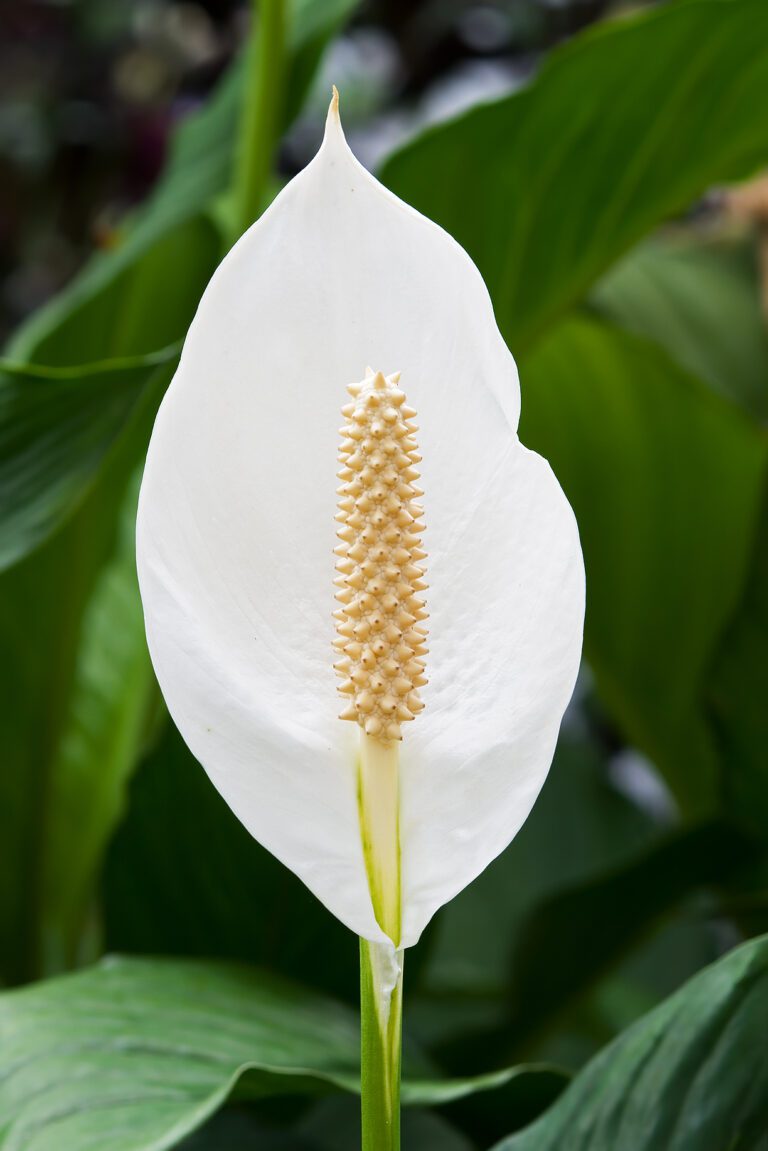
- Peace Lily (tolerates lower light, flowers best in bright indirect)
- Spider Plant
- Hoya (all species)
- Calathea (lower end of bright indirect; protect from direct)
- Most ferns (lower end of bright indirect)
For specific care guides, see our plants hub.
How to Identify Bright Indirect Light Without Tools
Method 1: The shadow test (described above)
Quick visual check. Sharp shadow with soft edges = bright indirect.
Method 2: The reading test
Can you comfortably read a book at this location during the day without turning on a lamp? If yes, the light is at least medium-bright. If you need a lamp, the location is too dim for plants needing bright indirect.
Method 3: The newspaper test
Hold a newspaper at the plant’s location at noon. If you can easily read small print without straining, the light is at least medium. For bright indirect, the page should appear well-lit, almost like reading outdoors on a cloudy day.
Method 4: Distance from window
For most homes:
- 0-2 feet from sunny window with direct sun: too bright (direct sun)
- 2-5 feet from sunny window: bright indirect (probably correct)
- 5-8 feet from sunny window: medium indirect
- Over 8 feet from sunny window: low light
Common Mistakes Identifying Bright Indirect
Mistake 1: Assuming any indoor light is “bright”
Human eyes adapt and even dim spaces look “bright enough” to us. A spot that feels reasonably lit to you may be only 200-500 lux for plants — true low light. Use a meter or shadow test.
Mistake 2: Confusing direct sun for bright indirect
Direct sun hitting leaves through a window is not bright indirect. Plants needing bright indirect can scorch in direct sun. The defining feature of indirect is that no direct sun beam touches the plant.
Mistake 3: Forgetting seasonal changes
A spot that is bright indirect in summer may drop to medium or even low light in winter as the sun’s angle shifts and daylight hours shorten. Reassess plant placement seasonally.
Mistake 4: Trusting “bright” rooms across long distances
A room that looks bright when you walk in often has only one bright zone (near the window). The far corners may be medium or low. Place plants based on actual light at their specific location, not the room’s overall feel. The Royal Horticultural Society’s houseplant pages reinforce the importance of matching plants to specific spots.
Mistake 5: Ignoring obstructions
Buildings, trees, awnings, and balconies dramatically reduce light reaching windows. A south-facing window in a city apartment with another building 20 feet away may deliver less light than a north-facing window in a suburban home.
Examples: Bright Indirect Light in Real Homes
Apartment with east-facing windows
Place plants on or near the windowsill (within 3 feet) for ideal bright indirect. Morning sun is gentle and tolerated by most species. East windows are widely considered the best plant windows.
House with south-facing living room
Place plants 3-6 feet back from the window or behind sheer curtains. The window itself receives direct sun for hours; back the plants away from that direct beam.
Open-plan loft with one wall of windows
Establish “plant zones” within 4-6 feet of the windows. Beyond that distance, light drops too sharply for plants needing bright indirect. Use grow lights for plants further from windows.
Office with overhead fluorescent and one window
Bright indirect zones exist within 3-4 feet of the window. The rest of the office (relying on fluorescent ceiling light) is medium-low at best.
Bathroom with single small window
Bright indirect zones exist directly under the window or on a shelf right next to it. Beyond a few feet, light drops to low.
How to Adjust Light for Plants Showing Symptoms
Plant looks pale or leggy (not enough light)
Move closer to a window. Move to a brighter exposure (north → east → south). Add a grow light. Trim curtains or remove obstructions.
Plant has bleached or scorched leaves (too much direct light)
Move back from the window 2-4 feet. Add a sheer curtain. Move to an east-facing exposure with gentler morning sun.
Variegated plant losing variegation
Almost always insufficient light. Move closer to the brightest window or add a grow light. Variegated cultivars need the upper end of bright indirect.
FAQ
How is bright indirect light different from filtered light?
They are essentially the same. “Filtered” usually means light passing through a sheer curtain, leaves of an outdoor tree, or other diffusing material. “Indirect” means the light source is not directly visible to the plant. Both result in the same diffuse, glare-free conditions plants need.
Can a north-facing window provide bright indirect light?
Yes, but at the lower end of the range. North windows in temperate climates deliver consistent indirect light all day, typically 1,500-3,500 lux. Plants tolerant of medium-bright will thrive; plants needing the upper bright indirect (5,000-10,000 lux) may underperform.
How many hours of bright indirect light do plants need?
Most tropical houseplants need 6-10 hours of bright indirect daily. Less than 6 hours per day pushes plants toward medium or low light tolerance even if peak intensity is bright indirect. Total daily light (Daily Light Integral) matters, not just peak intensity.
Is artificial lighting the same as bright indirect?
Standard household LED bulbs are not bright enough to count as bright indirect (typically 200-500 lux at desk level). Dedicated LED grow lights can provide equivalent bright indirect intensity (2,500-10,000 lux) at the right distance. For low-light spaces, grow lights replace natural bright indirect.
Why does my plant lean toward the window if it has bright indirect?
Plants always grow toward the strongest light source. Even in adequate bright indirect, they reach for slightly brighter zones. Rotate plants every 1-3 months to keep growth balanced.
Can I use a curtain to convert direct sun into bright indirect?
Yes. A sheer or light-colored curtain diffuses direct sun into bright indirect that most plants tolerate. Heavy curtains block too much light. The curtain should let plenty of light through; you should be able to see clearly through it.
Bright Indirect Light Is the Default for Most Plants
Once you understand what bright indirect actually means, plant placement becomes systematic. Walk through your home with a smartphone lux app, identify the bright indirect zones, and match plants to those zones. Light goes from mysterious to measurable.
For the broader light system, see our complete indoor plant light guide. For dim spaces, the low light explained guide covers what to do when bright indirect is not available. For matching specific rooms, the low-light houseplants guide covers 12 plants for dim spaces.
Light is the foundation. Now you know how to measure it.
Related reading: For the broader context, see the complete guide to hard-to-kill houseplants, all care fundamentals, houseplant troubleshooting hub.