
The snake plant you bought at Home Depot is one of more than 70 named cultivars in the Dracaena trifasciata family. Most people only ever see two or three varieties (the classic Laurentii, maybe a Moonshine), but the wider world of snake plant varieties includes silvery-blue cylindrical leaves, near-black foliage, compact rosettes, dwarf shelves, and rare patented cultivars worth hundreds of dollars per plant.
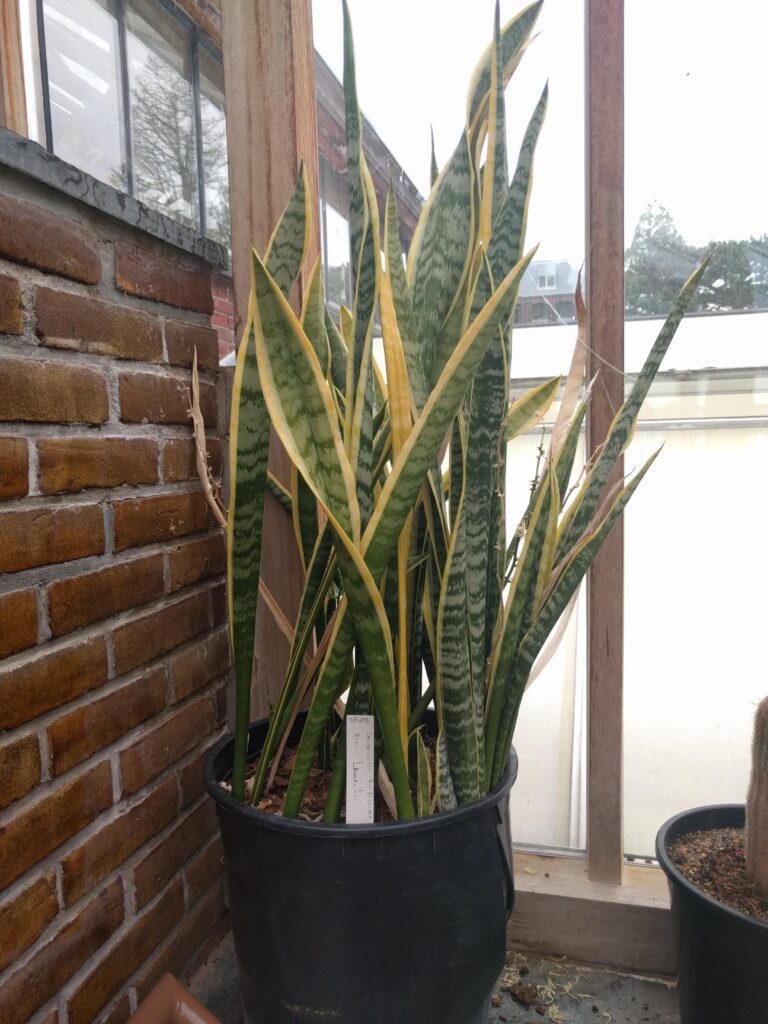
This guide covers the 10 most worth-knowing snake plant varieties: what they look like, how care differs, where to find them, and what to expect at the price point.
Quick Answer: Best Snake Plant Varieties
The 10 best snake plant varieties for indoor growing are Laurentii (the classic yellow-edged), Moonshine (silvery green), Cylindrica (round leaves), Black Gold (dark with gold edges), Hahnii (dwarf bird’s nest), Bantel’s Sensation (white striped), Whitney (compact silver), Futura Superba (compact gold-edged), Twisted Sister (curling leaves), and Starfish (fan-shaped). Care is nearly identical across cultivars, but variegated varieties need brighter light to maintain their patterns.
What All Snake Plant Varieties Have in Common
Before diving into specific cultivars, the basics: every variety on this list is a Dracaena trifasciata cultivar (formerly Sansevieria trifasciata). All share:
- Drought tolerance. Water every 10-14 days summer, every 3-4 weeks winter, only when soil is dry 2 inches down.
- Low to bright indirect light. Variegated cultivars need brighter light to maintain their patterns.
- Fast-draining soil. Cactus or succulent mix. Heavy potting soil rots the rhizome.
- Pet toxicity. All snake plant varieties are mildly toxic to cats and dogs (saponins). The ASPCA’s snake plant entry covers symptoms and severity.
- Slow growth. 2-4 new leaves per year is typical for most varieties.
The differences between varieties are mostly visual: leaf shape, color, variegation pattern, and mature size.
1. Laurentii (The Classic)
The snake plant variety almost everyone has seen. Tall, sword-shaped leaves with bright golden-yellow edges and dark green centers striped with pale horizontal bands. Grows 2 to 4 feet tall indoors. The default snake plant in offices, airports, and dentist lobbies worldwide.
Care notes: Needs medium to bright indirect light to maintain yellow edges. In low light, variegation fades and may revert to solid green. Cannot be propagated by leaf cuttings without losing the yellow variegation; use division to preserve the pattern.
Availability: Every nursery and big-box store. $15-$40 for a 6-inch pot.
2. Moonshine (Silvery Green)
Broad, paddle-shaped leaves in pale silver-green with no horizontal striping. In bright light, the leaves stay ghostly silver. In lower light, they darken toward sage. Stays compact, rarely exceeding 2 feet. A shelf-sized variety that reads more decorative than architectural.
Care notes: Prefers bright indirect light to maintain its silvery hue. Tolerates lower light but turns greener. Slower growing than Laurentii. Sometimes mistakenly sold as “Silver Queen.”
Availability: Common at specialty nurseries and online plant shops. $25-$60.
3. Cylindrica (African Spear)
Round, pencil-thick leaves that point straight up like green chopsticks or arrows. Sometimes sold braided into decorative shapes. Looks completely different from typical snake plants, but care is identical.
Care notes: Same care as other snake plants. Grows 2-3 feet tall. The braided form gradually unbraids over time as leaves mature.
Availability: Common at nurseries. $20-$50 depending on size and braiding.
4. Black Gold
Similar overall silhouette to Laurentii but with much darker, near-black green leaves and narrower golden edges. Dramatic in a minimalist white pot. The visual contrast of the dark leaves with gold edges is striking.
Care notes: Identical to Laurentii. Needs medium to bright indirect light to maintain the gold edges. Grows 2-3 feet.
Availability: Common at specialty nurseries. $25-$60.
5. Hahnii (Bird’s Nest)
A dwarf cultivar that tops out around 6-8 inches. Leaves form a tight rosette instead of pointing straight up. Perfect for desks, small shelves, and bathrooms where a full-size snake plant would be too large. Available in plain green and several variegated forms (Golden Hahnii, Silver Hahnii).
Care notes: Same care as larger varieties. The compact rosette shape catches more light at all sides. Best for shelves where it can be viewed from above.
Availability: Common. $10-$25 for a 4-inch pot.
6. Bantel’s Sensation
Tall, narrow leaves with thin vertical white stripes throughout. Unlike most snake plants where variegation runs along edges, Bantel’s Sensation has full-leaf white striping. Striking but slower growing.
Care notes: Needs the brightest indirect light of any common snake plant variety to maintain the white stripes. In low light, it slowly reverts to mostly green. Slowest growing of the popular varieties.
Availability: Specialty nurseries and online. $30-$80.
7. Whitney
Compact variety with silvery-green leaves and dark green margins. Stays under 18 inches tall. The reverse pattern from Laurentii (silver center, dark edges) makes it visually distinct.
Care notes: Tolerates a wider range of light than other variegated varieties. Compact size makes it ideal for shelves and small spaces. Slow growing but very hardy.
Availability: Specialty plant shops and online specialists. $25-$60.
8. Futura Superba
Shorter, wider version of Laurentii. Same yellow edges, but leaves are stockier and the plant stays more compact (12-18 inches). Often confused with Hahnii but is actually a separate cultivar.
Care notes: Identical to Laurentii. Best for tabletop and shelf displays where a tall Laurentii would be too dramatic.
Availability: Common at specialty nurseries. $20-$50.
9. Twisted Sister
A curiosity cultivar with spiraling, twisted leaves that grow in a corkscrew pattern. Each leaf curls and folds as it matures. Stays compact (12-15 inches). Conversation-starter rather than visual showpiece.
Care notes: Same as standard snake plants. The twisting habit is genetic and develops over the leaf’s lifetime; new leaves emerge straight and curl as they age.
Availability: Online specialists. $30-$70.
10. Starfish (Boncel)
Cylindrica relative with shorter, fan-shaped clusters of round leaves. Resembles a green starfish or fan when viewed from above. Stays under 12 inches tall. Excellent for shelves and small containers.
Care notes: Same as Cylindrica. The fan shape develops naturally; do not try to bend or shape the leaves.
Availability: Specialty nurseries and online. $20-$50.
Snake Plant Varieties Comparison Table
| Variety | Mature Height | Variegation | Light Needs | Price Range |
|---|---|---|---|---|
| Laurentii | 2-4 ft | Yellow edges | Bright indirect | $15-$40 |
| Moonshine | 1-2 ft | Silver-green | Bright indirect | $25-$60 |
| Cylindrica | 2-3 ft | Solid green | Any | $20-$50 |
| Black Gold | 2-3 ft | Gold edges | Bright indirect | $25-$60 |
| Hahnii | 6-8 in | Various | Any | $10-$25 |
| Bantel’s Sensation | 2-3 ft | White stripes | Bright indirect | $30-$80 |
| Whitney | 1-1.5 ft | Silver center | Medium-bright | $25-$60 |
| Futura Superba | 1-1.5 ft | Yellow edges | Bright indirect | $20-$50 |
| Twisted Sister | 1-1.5 ft | Solid green | Any | $30-$70 |
| Starfish | under 1 ft | Solid green | Any | $20-$50 |
How to Choose the Right Snake Plant Variety
For absolute beginners
Start with Laurentii or plain green Cylindrica. Both are widely available, affordable, and the most forgiving cultivars.
For low-light apartments
Choose solid-green varieties: standard Cylindrica, Hahnii (plain green form), Twisted Sister, Starfish. Variegated cultivars need more light to maintain patterns.
For shelf or small-space displays
Hahnii, Whitney, Futura Superba, or Starfish all stay compact (under 18 inches). Perfect for desks, bookshelves, and bathroom counters.
For statement pieces
Tall Laurentii, Black Gold, or Bantel’s Sensation in 8-12 inch pots make impressive floor plants. Place in entryways, next to sofas, or as room dividers.
For collectors
Bantel’s Sensation, Whitney, Twisted Sister, and rarer cultivars (Futura Robusta, Lily, Cleopatra) are worth seeking out from specialty growers. Prices climb past $100 for mature specimens of less common varieties.
Where to Buy Rare Snake Plant Varieties
Big-box stores
Home Depot, Lowe’s, and IKEA reliably carry Laurentii, Moonshine, and standard Hahnii. Don’t expect anything more unusual.
Local independent nurseries
Often carry a wider selection including Black Gold, Cylindrica, and Twisted Sister. Best for choosing in person.
Online plant specialists
The Sill, Bloomscape, Pistils Nursery, Logee’s, Steve’s Leaves, and various Etsy growers offer the rarest cultivars. Expect to pay $30-$200+ depending on rarity and size. These are often shipped as cuttings or small starter plants.
Plant trades and Facebook groups
Active plant collector communities trade rare cultivars at much lower prices than commercial sellers. Search for snake plant or Sansevieria collector groups on Facebook and Instagram.
FAQ
Is variegated snake plant care different from regular snake plant care?
Slightly. Variegated varieties (Laurentii, Black Gold, Bantel’s Sensation, Moonshine) need brighter indirect light to maintain their patterns. In low light, they revert toward solid green over months. Otherwise, watering, soil, and fertilizing are identical.
How do I tell if my snake plant variety is rare or common?
Look it up by name. Common varieties (Laurentii, Moonshine, Cylindrica, Hahnii) appear at every garden center and cost $15-$40. Rare varieties (Bantel’s Sensation, Whitney, Twisted Sister, Lily, Cleopatra) are sold by specialty growers and cost $30-$200+.
Can I grow multiple snake plant varieties together in one pot?
Yes, as long as all share the same care requirements (which most snake plants do). A pot with a Laurentii, a Moonshine, and a Hahnii makes a striking mixed display. Just ensure each variety has enough space (1-2 inches between rhizomes minimum).
Why does my Laurentii keep losing its yellow edges?
Insufficient light. Variegated tissue (the yellow areas) has less chlorophyll and needs brighter conditions to maintain. Move the plant closer to a window, add a grow light, or accept that it will gradually become a solid green plant. New growth in good light returns to variegated.
Are there variegated dwarf snake plant varieties?
Yes. Golden Hahnii, Silver Hahnii, and Hahnii Banded are all dwarf cultivars with variegation. Stay under 8 inches tall and perfect for desks. Same care as larger snake plants.
What is the rarest snake plant variety?
True rarities include Sansevieria francisii (now Dracaena pearsonii), Sansevieria masoniana ‘Mason’s Congo’ variegated, and various crested or spiraled cultivars. Prices for mature specimens can exceed $500. Most home growers should focus on the 10 varieties in this guide rather than chase ultra-rares.
How to Identify Your Unknown Snake Plant Variety
If you bought a snake plant without a variety tag (common at big-box stores), use this quick identification guide:
- Leaf shape: Sword-shaped flat leaves point you to Laurentii, Black Gold, Bantel’s Sensation, Whitney, or Futura. Round cylindrical leaves indicate Cylindrica or Starfish. Twisted leaves indicate Twisted Sister.
- Mature size: Under 1 foot suggests Hahnii, Whitney, or Starfish. 1-2 feet suggests Moonshine, Whitney, or Futura. 2-4 feet suggests Laurentii, Black Gold, or Bantel’s Sensation.
- Variegation pattern: Yellow edges on green = Laurentii or Futura Superba. Gold edges on near-black = Black Gold. Vertical white stripes = Bantel’s Sensation. Silver-green throughout = Moonshine. Silver center with dark edges = Whitney. No variegation = Cylindrica, Starfish, or Twisted Sister.
- Growth habit: Upright sword-like = standard cultivars. Tight rosette = Hahnii. Spiraling = Twisted Sister. Fan-shaped cluster = Starfish.
If you are still unsure, snap a photo and post in a snake plant or Sansevieria collector group on Facebook. Members can usually identify cultivars from a clear photo within hours.
Snake Plant Variety Knowledge Pays Off
Knowing the cultivar of your snake plant changes how you care for it (light needs especially) and how you propagate it (variegation preservation). It also unlocks a richer plant-collecting hobby than the standard “I have a snake plant” mindset.
For the broader snake plant care system, see our complete snake plant care guide. For propagation specifically, the snake plant propagation guide covers method by method including the variegation reversion warning. For watering tailored to snake plants, the watering schedule guide applies to every variety on this list.
One species, dozens of looks. The same easy care, every time.
Related reading: For the broader context, see the complete guide to hard-to-kill houseplants, all plant care guides, complete watering guide.