
Spider mites are the most damaging pest your houseplant can get, partly because they are nearly invisible until significant damage has occurred. By the time you see fine webbing between leaves, the population has been building for weeks. The good news: spider mites have one critical weakness — they cannot survive in humid conditions.
This guide covers the complete spider mite battle plan, from early identification through systematic elimination.
Quick Answer: How to Get Rid of Spider Mites
Spider mites are tiny (less than 1mm) eight-legged mites that suck plant juices, causing yellow stippling and fine webbing on leaves. They thrive in dry indoor air, especially during winter heating season. Eliminate them by showering the plant thoroughly to dislodge mites, then applying insecticidal soap or neem oil weekly for 3 weeks. Increasing ambient humidity to 50%+ prevents reinfestation. Severely infested plants may need to be discarded to prevent spread to your collection.
What Spider Mites Are
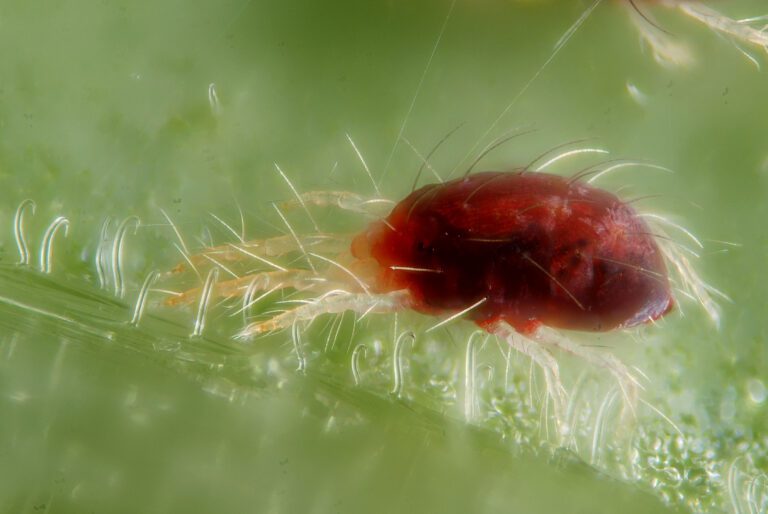
Spider mites are not insects but actual mites, related to spiders and ticks. The most common species on houseplants is the two-spotted spider mite (Tetranychus urticae), which can complete its lifecycle in 1-2 weeks under warm, dry conditions.
- Adults: 0.5mm long (smaller than a poppy seed), reddish-brown to tan
- Eight legs (true insects have six)
- Live on undersides of leaves
- Reproduce extremely fast in dry warm conditions
- Feed by piercing leaf cells and sucking out contents
- Each female lays 100+ eggs in her 30-day life
Their tiny size and underside hiding makes them invisible to casual observation. Most people only notice them when damage is significant or webbing appears.
How to Identify Spider Mites
Direct visual signs
- Tiny moving specks on the undersides of leaves (use a magnifying glass)
- Fine webbing between leaves and stems (advanced stage)
- White or silvery stippling on leaf surfaces (feeding damage)
- Yellow speckled patterns on leaves
- Bronze or rust coloration on heavily infested leaves
The paper test
Hold a piece of white paper under a leaf and gently shake or tap the leaf. Tiny moving specks fall onto the paper. They appear as moving dots about the size of pepper grains.
The webbing test
Look closely at the joint where leaves meet stems and at the very tips of leaves. Fine silk-like threads (much finer than household cobwebs) confirm spider mite presence at moderate to severe infestation.
Why You Have Spider Mites
Spider mites thrive in:
- Low humidity (below 40%, especially below 30%)
- Warm temperatures (70-85°F)
- Dusty leaves (dust provides cover and feeding sites)
- Stressed plants (weakened immunity)
- Crowded plant areas (easy spread between plants)
- Plants near heating vents (dry, warm air ideal for mites)
The combination of dry winter heating and crowded plant collections creates spider mite paradise. Most home spider mite outbreaks start in winter.
Treatment Plan: The Complete Battle
Step 1: Isolate immediately
Move the affected plant away from your other plants. Spider mites spread by air currents, walking, and even on your hands. A single contaminated plant can infect a whole collection within weeks.
Step 2: Shower the plant thoroughly
Take the plant to a sink, bathtub, or shower. Use room-temperature water at moderate pressure to wash all surfaces, especially undersides of leaves. This dislodges adult mites and breaks webbing. Cover the soil with plastic if you want to avoid soaking it.
Repeat the shower 3-5 times with 1-2 minutes between rinses. Pay special attention to leaf joints and the undersides of leaves.
Step 3: Apply insecticidal soap
Spray all leaf surfaces (top and bottom) with insecticidal soap. Coverage matters more than concentration. Use commercial insecticidal soap or make your own (1 tablespoon mild dish soap per quart of water — avoid degreasing soaps with harsh additives).
The soap dries on the leaves and disrupts mite cell membranes. Effective at killing exposed mites but does not affect eggs.
Step 4: Apply neem oil weekly
Neem oil (cold-pressed from neem tree seeds) acts as both an insecticide and a growth regulator. Mix per label instructions (typically 1-2 tsp per quart of water with a drop of dish soap as emulsifier). Spray all leaf surfaces.
Neem oil affects egg-laying and disrupts mite reproduction. Apply weekly for 3 weeks to break the lifecycle.
Step 5: Increase humidity
Raise ambient humidity to 50%+ around the plant. A small ultrasonic humidifier ($30-$80) running 4-8 hours daily prevents reinfestation. Spider mites struggle in humid conditions and rarely establish lasting populations above 60% humidity. See our humidity for indoor plants guide.
Step 6: Inspect weekly
For 4-6 weeks, inspect the plant weekly for any signs of returning mites. Re-treat with neem oil at first sign of recurrence. Spider mite eggs hatch in 3-5 days, so any survivors quickly rebuild populations.
For Severe Infestations
If insecticidal soap and neem oil are not controlling the population:
Systemic insecticides
Imidacloprid-based granules or drenches absorbed through roots make the entire plant toxic to feeding mites. Stronger but longer-lasting chemical residue. The ASPCA’s plant database covers pet safety considerations.
Predatory mites
Phytoseiulus persimilis (predatory mites) feed on spider mites but ignore plants. Available from biological control suppliers. Effective for serious collectors with multiple infested plants. Apply per supplier instructions.
Discard severely infested plants
If a plant has lost more than 50% of leaves to mite damage, discarding may be the right call. Saving a damaged plant risks infecting your entire collection. Bag the plant and trash; do not compost (eggs survive composting).
How to Prevent Spider Mites
- Maintain humidity above 50% with a humidifier in dry months
- Inspect plants monthly with a magnifying glass on leaf undersides
- Wipe leaves periodically with a damp cloth to remove dust and check for early infestations
- Quarantine new plants 2-3 weeks before adding to collection
- Avoid crowded plant placements that allow easy spread
- Keep plants away from heating vents that create dry, warm conditions
- Shower plants monthly as preventive cleaning
- Address plant stress early — weakened plants attract more mites
Plants Most and Least Prone to Spider Mites
Most prone
- Calathea — high humidity needs make low-humidity vulnerability
- Maidenhair Fern — extreme humidity dependency
- Boston Fern — humidity-loving
- Spider Plant — yes, ironically; thin leaves attractive to mites
- Indoor Roses and Hibiscus — very prone
- Many succulents in dry conditions
Least prone
- Snake Plant — thick waxy leaves discourage mites
- ZZ Plant — same
- Cast Iron Plant — tough leaves
- Rubber Plant — thick leaves
- Most aroids with thick waxy leaves
FAQ
How quickly do spider mites multiply?
Extremely fast. In warm dry conditions, the egg-to-adult cycle is just 1-2 weeks. A single female can produce hundreds of offspring in her lifetime. A small infestation becomes a major problem within 3-4 weeks.
Can spider mites kill my plant?
Yes. Severe infestations damage so many cells that the plant cannot photosynthesize effectively. Sustained heavy infestations kill plants over weeks to months.
Are spider mites visible to the naked eye?
Barely. Adults are 0.5mm — at the edge of human visual acuity. You can see them as moving specks if you know to look, but a magnifying glass makes identification much easier.
Do spider mites bite humans?
No. Plant spider mites only feed on plant tissue. They cannot survive on humans or pets. The dust mites that cause allergies are different species.
Will my plant recover from spider mite damage?
The plant recovers if mites are eliminated and damage is limited. Existing damaged leaves do not heal but new growth comes in clean. Severely defoliated plants may need months to recover full leaf mass.
Why do spider mites keep coming back?
Reinfestation usually means: mites in the eggs hatched after treatment ended, ambient humidity is still too low, mites spread to other plants in your collection, or you brought in a new infested plant. Address all sources to prevent recurrence.
Can I use rubbing alcohol on spider mites?
Yes for spot treatment. Wipe affected areas with a cotton swab dipped in 70% isopropyl alcohol. Effective for small populations. For larger infestations, insecticidal soap or neem oil sprays are more practical.
Spider Mites Are Beatable With Persistence
Spider mites are the most damaging houseplant pest, but consistent treatment combined with humidity intervention eliminates them. The key is treating weekly for 3+ weeks to catch newly hatched mites, and addressing ambient humidity to prevent reinfestation.
For broader pest information, see our houseplant pests hub. For other common pests, the fungus gnats guide and mealybugs guide cover the other usual suspects. For maintaining humidity that prevents spider mites, our humidity for indoor plants guide covers the strategies.
Spider mites cannot survive humidity. Raise it, and they leave.
Related reading: For the broader context, see the complete guide to hard-to-kill houseplants, all troubleshooting guides, watering fundamentals.