
Mealybugs are the houseplant pest that earns the strongest “ugh” reaction from experienced plant owners. The white cottony clusters in leaf joints look immediately wrong, they spread between plants quickly, and they are surprisingly hard to fully eliminate. The good news: mealybugs respond well to consistent treatment, and complete eradication is possible with patience.
This guide covers exactly how to identify mealybugs, the treatment plan that actually works, and the prevention strategies that keep them from returning.
Quick Answer: How to Get Rid of Mealybugs
Mealybugs are small white cottony insects in plant leaf joints and undersides. Eliminate them by wiping each visible cluster with a cotton swab dipped in 70% isopropyl alcohol, then applying insecticidal soap or neem oil weekly for 3-4 weeks to catch newly hatched mealybugs. Severe infestations may require systemic insecticide. Inspect all nearby plants because mealybugs spread easily between collections. Most infestations clear within 4-6 weeks with consistent treatment.
What Mealybugs Are
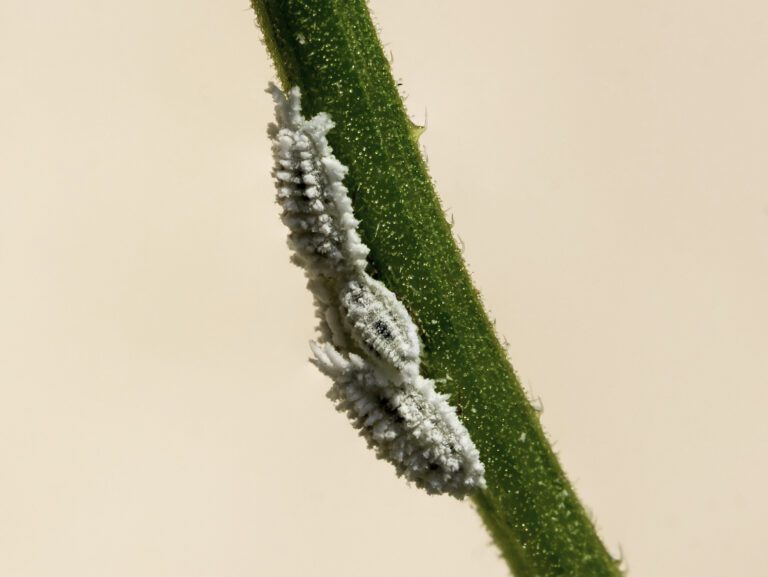
Mealybugs are scale insects in the family Pseudococcidae. The “mealy” name comes from the white waxy coating they secrete to protect themselves. The most common species on houseplants is the citrus mealybug (Planococcus citri).
- Adults: 2-5mm long, oval shape, soft bodies covered in white waxy coating
- Look like tiny pieces of cotton stuck to leaves and stems
- Move slowly compared to other pests
- Live in leaf joints, leaf undersides, and stem-leaf intersections
- Excrete sticky honeydew that can grow black sooty mold
- Reproduce continuously in warm conditions; egg-to-adult cycle is 4-6 weeks
- Each female lays 200-600 eggs in her 2-3 month lifetime
The waxy coating makes mealybugs water-resistant and somewhat resistant to contact insecticides — which is why elimination requires patience.
How to Identify Mealybugs
Visual signs
- White cotton-like clumps in leaf joints, leaf undersides, or stem nodes
- Sticky residue (honeydew) on leaves below infested areas
- Black sooty mold on the honeydew over time
- Yellowing or distorted leaves from feeding damage
- Stunted or twisted new growth
- Plant drooping or weakening in advanced cases
How to differentiate from other pests
- Mealybugs: white cotton clumps, slow-moving, in leaf joints
- Whiteflies: pure white flying insects, visible swarming when disturbed
- Powdery mildew: gray-white coating spreading across leaves (not in clumps)
- Cottony scale: similar appearance but immobile and on bark/stems
- Wooly aphids: rare on houseplants; mostly outdoor
Where mealybugs hide
Inspect these spots specifically:
- Where leaves meet stems (axils)
- Undersides of leaves
- New emerging growth (mealybugs love soft tissue)
- Around the base of the plant near the soil
- Inside curled or folded leaves
- On root mass when unpotting (root mealybugs)
Why Mealybugs Are Hard to Eliminate
Several factors make mealybugs uniquely persistent:
The waxy coating
The white coating repels water and most contact insecticides. Treatments must directly contact the bug body or be absorbed through plant tissue.
Hidden hiding places
Mealybugs hide in leaf joints and undersides where sprays do not reach. Manual treatment of every visible bug is required.
Egg sacs
Female mealybugs lay eggs in protective egg sacs (the white cottony mass often contains eggs in addition to bugs). Killing visible adults does not affect eggs that hatch over the next 2-4 weeks.
Multiple lifecycle stages
Crawlers (newly hatched mobile bugs) can be on the plant invisibly while adult bugs are being treated. Repeated treatments are required.
Quick spread
Mealybugs spread between plants easily. A single infested plant can contaminate a collection within weeks.
Treatment Plan: Step-by-Step
Step 1: Isolate the affected plant
Move the plant away from your collection immediately. Mealybugs spread by walking, by air currents, and on your hands. Containment is essential.
Step 2: Manual removal of every visible bug
Use a cotton swab dipped in 70% isopropyl alcohol. Touch each white cluster directly. The alcohol dissolves the waxy coating and kills the mealybug. Wipe affected areas thoroughly.
This is tedious but essential. Inspect every leaf joint, underside, and stem section. A magnifying glass helps spot smaller bugs.
Step 3: Shower the plant
After alcohol treatment, take the plant to a sink or shower and rinse thoroughly with room-temperature water. Pay special attention to leaf undersides and joints. Cover soil with plastic if avoiding wet soil is desired.
Step 4: Apply insecticidal soap or neem oil
Spray all leaf surfaces (top and bottom), stems, and leaf joints with insecticidal soap or neem oil mixed per label instructions. The soap or oil disrupts cell membranes of any remaining bugs.
Step 5: Repeat weekly for 4 weeks
Spot-check the plant weekly. New mealybugs hatch from any eggs that survived initial treatment. Treat any new bugs immediately with cotton swab + alcohol. Continue insecticidal soap weekly to catch newly hatched crawlers.
Step 6: Inspect surrounding plants
Check every plant near the affected one. Mealybugs spread before you notice them. Treat any plants showing early signs.
Step 7: Quarantine for 6 weeks total
Keep the plant isolated from your collection for at least 6 weeks (covering 1.5 lifecycle generations). Return only when no bugs have appeared for 3 consecutive weekly inspections.
For Severe or Persistent Infestations
Systemic insecticide
Imidacloprid-based granules sprinkled on soil or drench applied to soil. The plant absorbs the insecticide and feeding mealybugs die. More effective than topical sprays for hidden infestations. The ASPCA’s plant database covers pet safety considerations for various pesticides.
Repotting to address root mealybugs
Some mealybug species infest plant roots in addition to above-ground areas. If treatment doesn’t eliminate the problem, unpot the plant and inspect roots. Wash all soil off, treat roots with insecticidal soap, and repot in fresh sterile soil.
Discarding heavily infested plants
If after 6-8 weeks of treatment the infestation persists, or the plant has lost more than 50% of its leaves, discarding may be the right call. Bag the plant and discard in trash; do not compost.
How to Prevent Mealybug Returns
- Inspect plants weekly for the next 2-3 months after treating
- Quarantine new plants for 2-3 weeks before adding to your collection
- Keep plants healthy — stressed plants are more vulnerable
- Wipe leaves periodically with a damp cloth to remove dust and check for early infestations
- Avoid overcrowding in plant placements
- Maintain humidity above 40% — mealybugs like dry conditions
- Sterilize pots and tools after dealing with infested plants
- Keep new plant arrivals away from your main collection indefinitely if possible
Plants Most Prone to Mealybugs
- Succulents — favorite mealybug host
- Cactus — common infestation site
- Hoya — soft new growth attracts mealybugs
- Indoor citrus — citrus mealybug is named after them
- Orchids — common in collections
- African violets
- Philodendron and pothos — soft new growth attractive
- Schefflera (Umbrella plant)
- Indoor herbs (basil, mint)
FAQ
Will mealybugs spread to my pets or me?
No. Mealybugs feed only on plant tissue and cannot survive on humans, pets, or non-plant surfaces. They are a plant-only pest.
Are mealybugs harmful to my plant?
Yes. They suck plant juices, weakening the plant. Severe infestations damage growth, distort leaves, and can kill plants over months. Early intervention prevents serious damage.
Why does my plant keep getting mealybugs after I treat them?
Most likely: eggs survived initial treatment and hatched, mealybugs spread from another plant in your collection, or root mealybugs are present and not addressed by topical treatment. Continue treatment for full 6 weeks and check all nearby plants.
Can I use dish soap instead of insecticidal soap?
Yes, with caveats. Mild dish soap (1 tablespoon per quart of water) works as basic insecticidal soap. Avoid degreasing dish soaps or those with antibacterial additives. Commercial insecticidal soap is formulated for plant use and slightly more effective.
How quickly do mealybugs spread?
Females lay eggs continuously and crawler offspring move to new locations within days. A single mealybug colony can produce a noticeable infestation within 3-4 weeks. Spread between plants depends on proximity and air currents but can happen quickly in close collections.
Do mealybugs prefer certain conditions?
Mealybugs thrive in warm, dry conditions (60-80°F, low humidity). Cool or humid conditions slow their reproduction. This is why mealybug outbreaks are common in winter when indoor heating creates ideal conditions.
Are there mealybugs that affect roots?
Yes. Root mealybugs live in soil and feed on roots. They are harder to detect (no visible above-ground signs initially) and require unpotting to address. If above-ground treatment isn’t working, check the roots.
Mealybugs Are Manageable With Patience
Mealybugs are persistent but not unbeatable. The key is consistent treatment over 4-6 weeks combined with isolation and inspection of surrounding plants. Single-treatment approaches almost always fail; the systematic approach succeeds.
For broader pest information, see our houseplant pests hub. For other common pests, the fungus gnats guide and spider mites guide cover the other usual suspects. For maintaining healthy plants that resist pests, our complete watering guide and indoor plant light guide cover the foundations.
Mealybugs respond to consistent treatment. The plant on the other side of treatment is healthier than ever.
Related reading: For the broader context, see the complete guide to hard-to-kill houseplants, all troubleshooting guides, watering fundamentals.