
Plant propagation is the most satisfying houseplant skill you can learn. One plant becomes two, then five, then twenty. A $15 pothos in January can be 10 plants by December. A jade plant leaf in water becomes a new plant within weeks. Propagation turns houseplants from consumables into a sustainable hobby with unlimited growth potential.
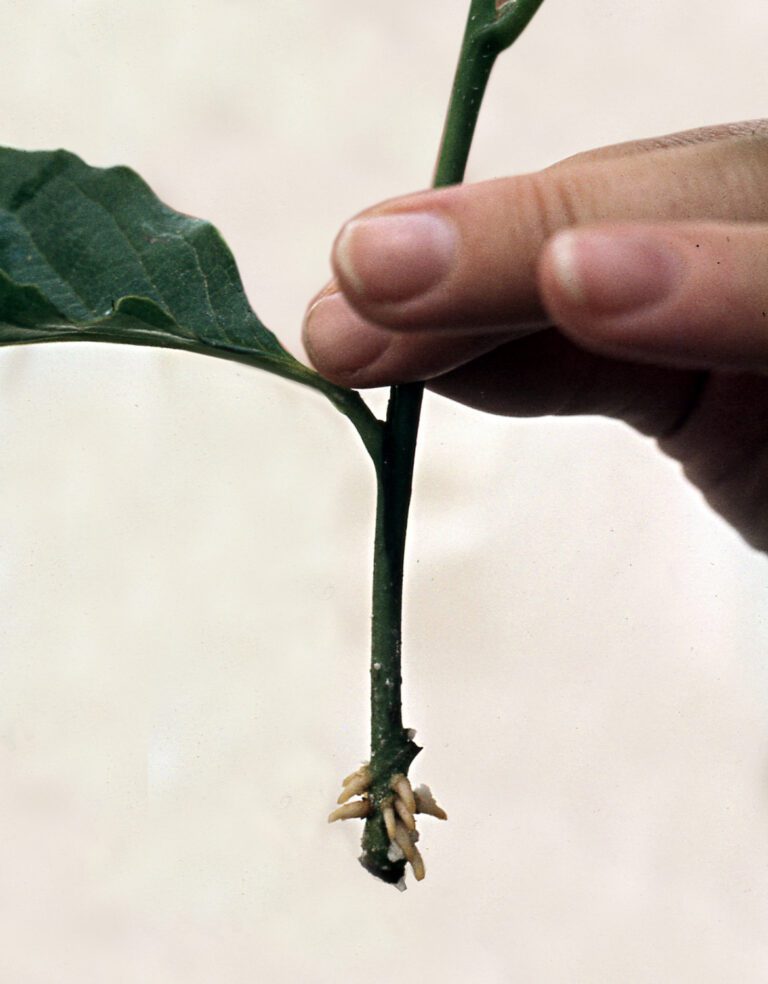
This guide covers the complete propagation system for indoor plants: the methods that work, the plants that propagate easiest, the tools you need, and the mistakes that prevent new plants from rooting.
Quick Answer: Indoor Plant Propagation Methods
The five reliable propagation methods for houseplants are water cuttings (easiest for beginners), soil cuttings (best for established plants), division (for mature root systems), leaf cuttings (for succulents and specific species like snake plants), and air layering (for long vines). Most popular houseplants (pothos, philodendron, monstera) propagate easily from stem cuttings. Succulents propagate from leaves. Snake plants propagate through division or leaf sections. Each method suits specific plant types.
Why Propagate?
Financial benefit
One $15 pothos can yield 10+ new plants over a year through propagation. Effectively turns houseplant purchases into ongoing assets rather than consumables.
Backup plants
Cuttings in water are insurance against the original plant dying. If you lose the mother plant, the cuttings provide replacements.
Gift plants
Propagated plants make excellent gifts. Friends and family appreciate living gifts more than cut flowers. Cost: free. Impact: significant.
Filling your space
Instead of buying 10 plants at $15 each, buy 2 plants and propagate to 20 over a year. Same collection for less money.
Learning about plants
Propagation teaches you how plants actually work. You see roots develop, observe growth patterns, understand what plants need at each lifecycle stage.
The 5 Main Propagation Methods
Method 1: Water Propagation (Easiest)
Cut a stem, put it in water, wait for roots. The most accessible method. Best for vining plants (pothos, philodendron), many tropical species, and even some succulents.
How it works: Stems cut at a node (the bump where leaves attach) produce roots when placed in water. You watch roots develop over 1-6 weeks.
Best for: Pothos, philodendron, monstera, spider plant, tradescantia, begonia, hoya (some species).
Timeline: Visible roots in 1-3 weeks, transplant-ready in 3-8 weeks.
Success rate: 90%+ with healthy cuttings.
Method 2: Soil Propagation
Stem cuttings planted directly into soil. Skips the water-to-soil transition stress but you cannot watch root development.
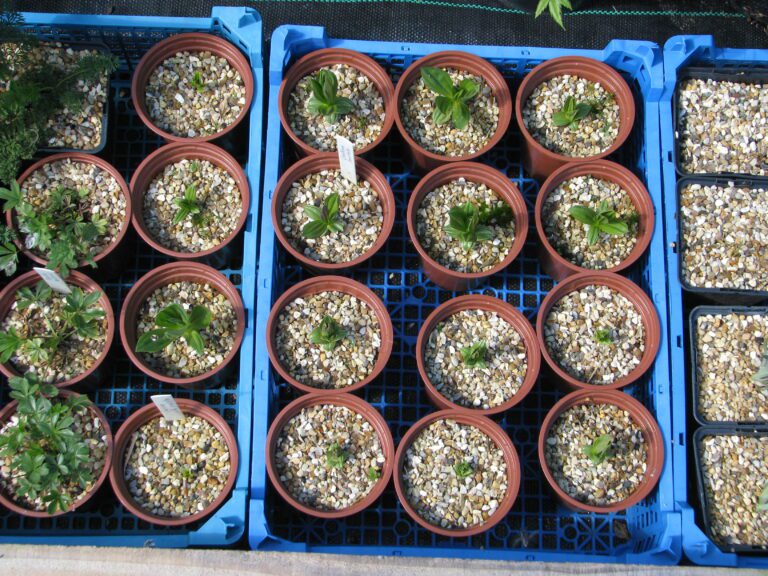
How it works: Cut stem with node, let cuts dry (callus) for 24 hours, plant in moist potting soil, keep barely damp until roots establish.
Best for: Most plants that root in water, plus succulents and cacti (which prefer soil).
Timeline: Roots in 3-6 weeks, established plant in 6-12 weeks.
Success rate: 70-90% depending on conditions.
Method 3: Division
Separating a mature plant into multiple smaller plants during repotting. Each division has its own root system and grows into a new plant immediately.
How it works: Remove plant from pot, identify natural divisions in root ball, separate with clean scissors or by hand, pot each division separately.
Best for: Snake plants, ZZ plants, peace lilies, Boston ferns, bird\’s nest fern, spider plants, bromeliads.
Timeline: Immediate new plants, establishes in 2-4 weeks.
Success rate: 95%+ with healthy mother plants.
Method 4: Leaf Cuttings
Rooting a leaf (or leaf section) to produce a new plant. Works for specific species with leaf-level regeneration ability.
How it works: Cut a healthy leaf (or section), let cuts callus, place in water or soil, wait for new plant to emerge from leaf base.
Best for: Succulents (jade, echeveria, kalanchoe), African violets, snake plants, Begonia rex, Zamioculcas (ZZ plants, very slow), peperomia.
Timeline: New plant visible in 1-6 months depending on species.
Success rate: 60-90% depending on plant.
Method 5: Air Layering
Creating roots on a stem while it\’s still attached to the parent plant. Advanced technique for long vines or difficult-to-propagate species.
How it works: Make a small wound on a stem, wrap with damp sphagnum moss, cover with plastic, wait weeks for roots to form, then cut the rooted section.
Best for: Fiddle leaf fig, rubber plant, monstera, long pothos vines.
Timeline: Roots in 4-8 weeks, ready to transplant in 6-10 weeks.
Success rate: 90%+ (plant stays nourished during rooting).
Propagation Method by Plant
| Plant | Best Method | Time to New Plant |
|---|---|---|
| Pothos | Water cuttings | 1-2 months |
| Philodendron (heartleaf) | Water cuttings | 1-2 months |
| Monstera | Water cuttings or air layering | 2-3 months |
| Snake Plant | Division or leaf cuttings | 3-12 months |
| ZZ Plant | Division or leaf cuttings | 6-18 months |
| Peace Lily | Division only | Immediate |
| Spider Plant | Plantlet propagation | 4-6 weeks |
| Succulents (jade, echeveria) | Leaf cuttings or stem cuttings | 2-4 months |
| Aloe Vera | Offset separation | Immediate |
| African Violet | Leaf cuttings | 2-4 months |
| Hoya | Stem cuttings | 2-4 months |
| Peperomia | Leaf or stem cuttings | 2-3 months |
| Rubber Plant | Air layering | 2-3 months |
| Fiddle Leaf Fig | Air layering | 2-3 months |
| Cast Iron Plant | Division | Immediate |
| Boston Fern | Division | Immediate |
Tools You Need
Essential
- Sharp sterilized scissors or pruning shears: clean cuts heal faster. Sterilize with rubbing alcohol between plants.
- Glass jars or vases: for water propagation. Clear so you can observe root development.
- Small pots with drainage holes: for transplanting rooted cuttings.
- Fresh potting mix: standard indoor mix with perlite for most, cactus mix for succulents.
Nice to have
- Rooting hormone powder ($5-$10): speeds root development by 1-2 weeks. Most plants root without it, but hormones help with difficult species.
- Clear plastic bags or humidity domes: maintain humidity around new cuttings during acclimation.
- Sphagnum moss: for air layering and some propagation methods.
- Labels: track propagation dates and plant types.
- Heat mat: seedling heat mats speed rooting in cold weather.
Step-by-Step: Water Propagation
Step 1: Choose a healthy stem
Select a stem with at least 2-3 leaves and 1-2 nodes. Avoid diseased or damaged stems.
Step 2: Make the cut
Cut 1/4 inch below a node with sterilized scissors. The node must be included in the cutting.
Step 3: Remove bottom leaves
Remove the lowest 1-2 leaves so the node is bare. Leaves underwater rot.
Step 4: Place in water
Use a glass jar with room-temperature water. Submerge at least one node. Position in bright indirect light.
Step 5: Change water weekly
Replace water every 7 days to prevent bacterial buildup. If water turns cloudy, change immediately.
Step 6: Wait for roots
1-3 weeks for most tropical plants, 3-8 weeks for slower species.
Step 7: Transplant to soil
When roots are 2-3 inches long, transplant to potting soil. Keep moist for first 2 weeks during transition.
Step-by-Step: Soil Propagation
Step 1: Take cutting
Same as water method. Cut below a node, remove lower leaves.
Step 2: Let cuts callus
Leave cuttings to dry for 24-48 hours. Callusing prevents rot when planted. Essential for succulents.
Step 3: Plant in soil
Insert callused cuttings into moist potting soil. Node should be below the soil surface for vines; base should rest on soil for succulents and leaf cuttings.
Step 4: Water lightly
Lightly moisten soil. Do not saturate. Overwatering rots cuttings before rooting.
Step 5: Create humidity (optional)
Cover with clear plastic bag or dome for first 2-3 weeks to maintain humidity during rooting.
Step 6: Wait patiently
Roots form in 3-6 weeks. Don\’t disturb cuttings during this time.
Step 7: Resume normal care
Once established (visible new growth), care as you would a mature plant.
Propagation Seasonal Guide
Spring (March-May)
Best propagation season. Plants in active growth mode, root faster. Ideal for all methods.
Summer (June-August)
Also excellent. Longer daylight and warmth accelerate rooting. Monitor water loss more closely.
Fall (September-November)
Slower but still workable. Plants transition to dormancy. Use this season for air layering projects that span winter.
Winter (December-February)
Slowest season. Rooting can take 2-3x longer. Use heat mats to speed rooting. Focus on hardy species.
Common Propagation Mistakes
Mistake 1: No node in the cutting
Nodes are where roots emerge. Cuttings without nodes never root, regardless of method.
Mistake 2: Skipping the callus step for succulents
Succulent cuttings planted immediately rot. Callus for 24-48 hours first.
Mistake 3: Overwatering cuttings
Cuttings without established roots cannot absorb much water. Keep soil barely damp, not wet.
Mistake 4: Direct sunlight on cuttings
Burns leaves and overheats water in propagation jars. Keep in bright indirect light only.
Mistake 5: Disturbing cuttings during rooting
Pulling cuttings to “check on roots” damages developing root systems. Leave cuttings alone during rooting period.
Mistake 6: Using unhealthy mother plants
Stressed or diseased parents produce weak cuttings. Only propagate from thriving plants.
Mistake 7: Ignoring seasonal timing
Winter propagation takes 2-3x longer than spring. Time projects for growing seasons when possible.
Advanced Techniques
Multiple cuttings from one stem
Long pothos or philodendron vines can be cut into multiple 4-inch sections, each with a node. One vine becomes 5-10 new plants.
Water to soil transition
Water-rooted cuttings benefit from a humidity dome for the first week after potting to ease transition to soil.
Using rooting hormone
Dip callused cut end in rooting hormone powder before planting. Speeds rooting and improves success rate.
Heat mats for winter propagation
Seedling heat mats ($15-$30) maintain consistent 70-75°F under propagation trays. Dramatically speeds winter rooting.
Propagation stations
Dedicated area with multiple glass jars for ongoing cuttings. Some owners maintain permanent propagation stations with rotating cuttings for gifts and expansion.
FAQ
Is it legal to propagate plants I bought?
For most houseplants, yes. Patented varieties (some Manjula pothos, Pink Princess philodendron, Raven ZZ) are technically protected, though home propagation for personal use is rarely enforced.
Can I propagate any plant?
Most houseplants propagate by some method. Some require specific techniques (fiddle leaf fig needs air layering, ZZ takes forever). A few resist propagation entirely (certain orchids, grafted cacti).
Should I use rooting hormone?
Optional for most plants. Plants that root easily (pothos, philodendron) don\’t need it. Plants that root slowly (ZZ, snake plant) benefit from it.
How long should I wait before transplanting water-rooted cuttings?
Wait until roots are 2-3 inches long with multiple branching root tips. Too-early transplanting fails due to insufficient roots; too-late roots become fragile from prolonged water growth.
Can I propagate in winter?
Yes, but slower. Plants in dormancy root 2-3x slower than during growing season. Heat mats help significantly.
Why aren\’t my cuttings rooting?
Common causes: no node in cutting, submerged leaves rotting, water too cold, direct sun, unhealthy mother plant, or disturbed roots during rooting period.
Can I share propagation cuttings with friends?
Yes. This is one of the joys of propagation. Rooted cuttings (in water or freshly potted) travel well and make appreciated gifts.
Propagation Transforms the Houseplant Hobby
Once you successfully propagate your first plant, you realize houseplants are infinitely renewable. Your collection grows without proportional spending. You can fill your space, gift friends, and recover from plant deaths with ease.
For specific plant propagation guides, see our snake plant propagation guide, pothos propagation guide. For care fundamentals that keep propagated plants healthy long-term, the watering guide and soil guide cover essentials. For comprehensive plant care, our complete hard-to-kill houseplants guide covers species selection.
The plant does most of the work. You just provide the jar, the patience, and eventually the new pot.
For deeper horticultural-science context on plant propagation, the Royal Horticultural Society’s propagation guide covers academic detail on the biology behind cuttings and division.