
Dark rooms aren’t plant graveyards. Not every apartment has sunny windows, not every office has skylights, Some rooms have one small north-facing pane, a view blocked by a neighboring building, or no window at all. The conventional wisdom is that plants need light and these rooms are a lost cause. That conventional wisdom is wrong.
A surprising number of houseplants evolved as understory species, rainforest groundcover, or shade-tolerant rocky outcrop plants. They do not want your sunny south-facing window. They want your dark hallway, your north-facing bedroom, and your basement study. The 12 plants below are the best-performing low-light houseplants you can buy, tested against the most forgiving conditions.
What Makes a Plant Good for Dark Rooms
Before jumping to the list, understand what you are actually matching. “Dark rooms” is not one condition; it is a range. The plants below tolerate the lower end well, but a pitch-black interior closet is still too dim for anything without supplemental grow lights.
True low-light conditions
- North-facing windows (receiving only indirect, never direct sun)
- Rooms 6+ feet from a window
- Spaces with obstructed light (nearby buildings, trees, awnings)
- Heavily curtained rooms
- Windowless interior rooms with only overhead lighting
- Basements with small or high windows
What low-light plants have in common
- Large, dark green leaves with dense chlorophyll to extract more energy from less light
- Slow growth rate (fast growth requires high light and energy)
- Tropical or understory origins where evolution selected for shade tolerance
- Thick, waxy cuticles that reduce water loss (since they grow in stable humid forest environments)
- Efficient photosynthesis at low light intensities
For toxicity ratings on every plant in this guide, the ASPCA’s full plant database is the authoritative reference. Variegated cultivars generally need more light than their solid-green counterparts, because the non-green areas of their leaves cannot photosynthesize. Stick to all-green varieties in dark rooms for best results.
The 12 Best Plants for Dark Rooms
Ranked in order of low-light tolerance, with the most extreme champions first.
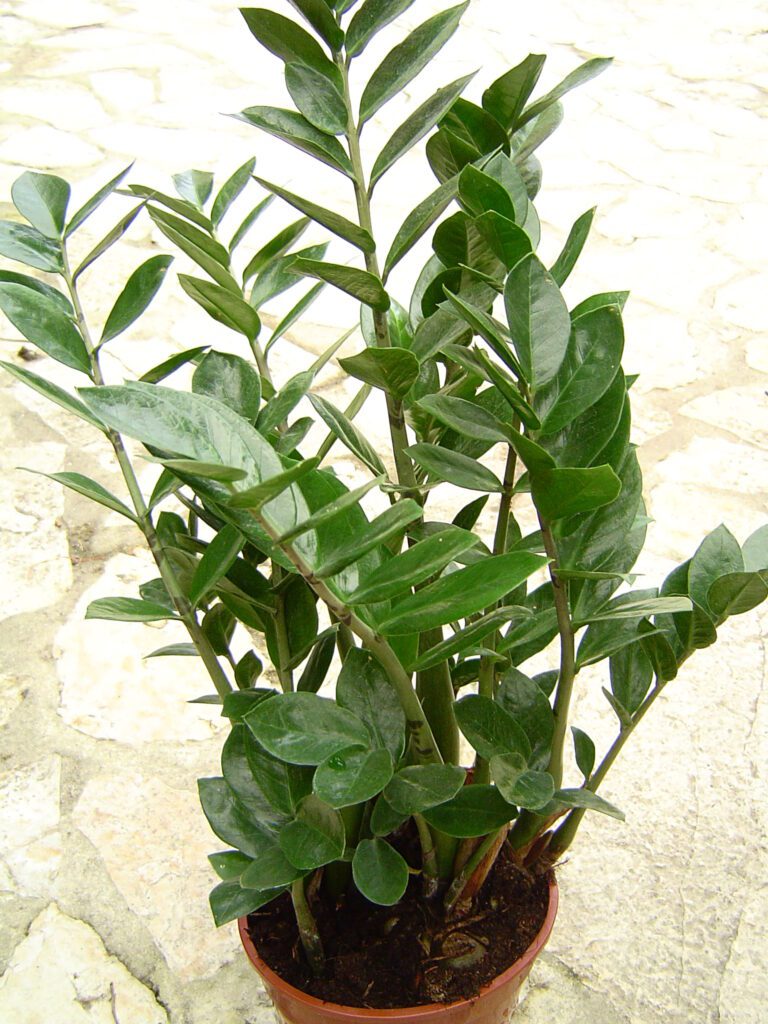
1. ZZ Plant (Zamioculcas zamiifolia)
Scientific name: Zamioculcas zamiifolia
Why it thrives here: The single most low-light tolerant common houseplant. Its rhizomes store water and nutrients, letting the plant skip growth seasons entirely in very dim conditions and still survive.
Light needs: Any, including very low.
Watering: Every 2 to 3 weeks in summer, every 3 to 6 weeks in winter.
Size: 2 to 3 feet tall at maturity.
Pet safe? No, toxic.
Difficulty: Easy.
See our full ZZ plant care guide.
2. Cast Iron Plant (Aspidistra elatior)
Scientific name: Aspidistra elatior
Why it thrives here: Named for its indestructibility. Earned its place as a Victorian parlor plant specifically because it survived dim gas-lit rooms. Still the toughest of the truly low-light options.
Light needs: Low to medium, cannot tolerate direct sun.
Watering: Every 10 to 14 days.
Size: Up to 3 feet tall, slow growing.
Pet safe? Yes.
Difficulty: Extremely easy.
3. Snake Plant (Dracaena trifasciata)
Scientific name: Dracaena trifasciata
Why it thrives here: Tolerates very low light indefinitely while surviving drought. Upright growth adds vertical interest to dim corners without needing a window.
Light needs: Any, thrives in bright indirect but tolerates low.
Watering: Every 10 to 14 days summer, 3 to 4 weeks winter.
Size: 2 to 4 feet tall, slow growing.
Pet safe? No, mildly toxic.
Difficulty: Easy.
Full snake plant care guide.
4. Chinese Evergreen (Aglaonema)
Scientific name: Aglaonema commutatum and hybrids
Why it thrives here: Specifically adapted to rainforest floor conditions. Some varieties (Red Siam, Silver Bay) add color without needing bright light, though deeper-colored varieties do need slightly more light.
Light needs: Medium to low.
Watering: Every 7 to 10 days.
Size: 1 to 3 feet tall and wide.
Pet safe? No, toxic.
Difficulty: Easy.
5. Pothos (Jade variety)
Scientific name: Epipremnum aureum ‘Jade’
Why it thrives here: The solid-green “Jade” pothos tolerates lower light than its variegated cousins (Golden, Marble Queen). Good for trailing from bookshelves in dark rooms.
Light needs: Medium to low, avoids direct sun.
Watering: Every 7 to 10 days.
Size: Trailing vines 4 to 10+ feet.
Pet safe? No, toxic.
Difficulty: Easy.
Full pothos care guide.
6. Peace Lily (Spathiphyllum)
Scientific name: Spathiphyllum wallisii
Why it thrives here: One of the few plants that will flower in relatively low light. Leaves droop dramatically when thirsty, making watering decisions obvious.
Light needs: Medium to low.
Watering: Every 5 to 7 days, when leaves start to droop.
Size: 1 to 2 feet tall and wide.
Pet safe? No, toxic.
Difficulty: Easy.
7. Heartleaf Philodendron (Philodendron hederaceum)
Scientific name: Philodendron hederaceum
Why it thrives here: More shade-tolerant than pothos. Grows as a trailing vine with heart-shaped leaves. Forgiving of missed waterings.
Light needs: Medium to low.
Watering: Every 7 to 10 days.
Size: Vines 3 to 8 feet long.
Pet safe? No, toxic.
Difficulty: Easy.
8. Parlor Palm (Chamaedorea elegans)
Scientific name: Chamaedorea elegans
Why it thrives here: Named for parlor rooms where Victorian homes kept them as indoor plants in dim conditions. One of very few palms that truly tolerates low light.
Light needs: Medium to low.
Watering: Every 7 to 10 days.
Size: 2 to 4 feet tall, feathery fronds.
Pet safe? Yes.
Difficulty: Easy to moderate.
9. Spider Plant (Chlorophytum comosum)
Scientific name: Chlorophytum comosum
Why it thrives here: Handles medium-low light well, produces baby plantlets you can propagate. The solid-green variety tolerates lower light than the variegated versions.
Light needs: Medium to low.
Watering: Every 7 to 10 days.
Size: 1 to 2 feet tall and wide, plus hanging plantlets.
Pet safe? Yes.
Difficulty: Easy.
10. Dracaena Marginata (Dragon Tree)
Scientific name: Dracaena marginata
Why it thrives here: Tolerates low light better than most tree-form houseplants. Tall, architectural, and nearly neglect-proof.
Light needs: Medium to low.
Watering: Every 10 to 14 days.
Size: 4 to 8 feet tall, slow growing.
Pet safe? No, toxic.
Difficulty: Easy.
11. Boston Fern (Nephrolepis exaltata)
Scientific name: Nephrolepis exaltata
Why it thrives here: Lower-light tolerant than most ferns. Best in humid rooms (bathrooms). Softer, more “plant-like” aesthetic than the other options.
Light needs: Medium to low.
Watering: Every 4 to 6 days, keeps soil consistently moist.
Size: 1 to 3 feet tall and wide.
Pet safe? Yes.
Difficulty: Moderate (needs humidity).
12. English Ivy (Hedera helix)
Scientific name: Hedera helix
Why it thrives here: Solid-green varieties handle low light. Grows as a trailing vine or up a trellis. Note: can be invasive outdoors, so keep contained.
Light needs: Medium to low.
Watering: Every 7 to 10 days.
Size: Vines 3 to 10 feet.
Pet safe? No, toxic.
Difficulty: Easy to moderate.
Plants to Avoid in Dark Rooms
These popular houseplants will fail in low light and are worth skipping.
Succulents and cacti
Aloe, jade, echeveria, and similar plants need 4+ hours of direct or very bright indirect light daily. They stretch, lose color, and eventually die in dark rooms. The “easy” reputation of succulents does not translate to low-light spaces.
Fiddle leaf fig (Ficus lyrata)
Famously fussy and demanding about light. Needs bright indirect light for at least 6 hours daily. Drops leaves within weeks in low light. Skip entirely in dark rooms.
Variegated plants
Marble Queen pothos, Manjula pothos, variegated philodendron, and other high-variegation plants lose their variegation in low light and revert to green. If you want the pattern, they need more light than dark rooms provide.
Most flowering plants
Anthuriums, orchids, begonias, and most blooming houseplants need medium to bright light to flower. In low light they survive but stop blooming. Peace lilies are one of the few exceptions.
Fiddle leaf fig alternatives
Rubber plants, dracaenas, and palms are tree-form plants that actually tolerate low light. Choose one of these if you want vertical dramatic foliage.
Placement Tips for Dark Rooms
Get them as close to windows as possible
Even in a low-light room, a spot 2 feet from the window is dramatically brighter than 6 feet from it. When possible, place plants directly on windowsills or within 2 to 3 feet of any natural light source.
Use reflective surfaces
White walls, mirrors near windows, and light-colored curtains all increase available light. A plant on a shelf opposite a mirror catches reflected light from the window across the room.
Rotate plants regularly
Turn pots 90 degrees every 2 to 4 weeks. This prevents one-sided growth and keeps plants from leaning dramatically toward the single light source.
Trade plants between rooms
If you have one bright room and several dim ones, rotate plants quarterly. A ZZ plant can live in a windowless bathroom for 3 months, then spend 3 months in a brighter living room recovering, then return. This keeps plants healthy without requiring grow lights.
Group plants by light needs
Keep your lowest-light plants in the darkest corners and place medium-light-tolerant plants closer to windows. Grouping by light needs reduces the guesswork and prevents wasting a window spot on a ZZ plant while a spider plant languishes in a corner.
Common Problems in Dark Rooms
Leggy stretched growth
Gaps between leaves become exaggerated as the plant reaches for light. Prune back leggy stems to encourage bushier growth from lower nodes, or move plant closer to the window. For pothos and philodendrons, leggy cuttings can be propagated.
Slow or no new growth
Normal for low-light plants; they grow slowly by design. If growth has completely stopped for 6+ months, the light is probably too dim even for that species. Consider adding a grow light or rotating with another plant in a brighter room.
Yellow or dropped leaves
Often from overwatering combined with low light (plants in dark rooms use less water). Adjust watering schedule to every 2 to 3 weeks minimum for most species. See our yellow leaves troubleshooting guide for the full diagnostic.
Mold on soil surface
Dark rooms often have lower airflow. Watering too frequently in these conditions encourages mold. Let soil dry more completely between waterings, and improve airflow with a small fan or occasional window opening.
Fungus gnats
Gnats thrive in consistently moist soil common in over-watered low-light plants. Let soil dry out more completely between waterings. Sticky traps catch adults; a layer of sand or diatomaceous earth on the soil surface kills larvae.
If Your Room Has No Windows: Grow Lights to the Rescue
A windowless room does not have to be a plant-free zone. For a dedicated guide, see plants for apartments without windows. A basic LED grow light converts any space into a viable plant environment.
What to buy
A full-spectrum white LED grow light, 20 to 40 watts, on a timer set for 10 to 14 hours daily. Clip-on lights work for single plants; bar-style lights (2 to 4 feet long) work for shelves of multiple plants. Expect to spend $25 to $60 for a decent home grow light.
How to position
Place the grow light 12 to 24 inches above the plant. Closer for high-light plants (succulents, which you would only keep in a windowless room with a grow light), farther for low-light plants that just need supplementary illumination.
Schedule
Use an outlet timer ($10) to automate. Most plants prefer 12 hours of light followed by 12 hours of darkness. Keeping lights on 24/7 actually reduces plant health because plants need dark periods for specific metabolic processes.
What grow lights unlock
With supplemental light, you can grow essentially any houseplant in any room, including succulents, fiddle leaf figs, and flowering plants. Many indoor plant hobbyists grow extensive collections in basements, closets, and interior rooms using only grow lights.
See the indoor plant light guide for detailed grow light specifications.
Frequently Asked Questions
What is the absolute best plant for a windowless bathroom?
A ZZ plant. It tolerates no natural light for months at a time, thrives on humidity, and is happy to be ignored. Second choice: a pothos Jade variety, which handles low light and can trail from a high shelf.
Can plants survive with only overhead LED lighting?
It depends on the lighting intensity and duration. Standard room LED ceiling fixtures provide minimal usable light for plants (typically 100 to 500 lux at the floor). Low-light tolerant plants (ZZ, cast iron, Chinese Evergreen) can survive this marginally if the room is lit many hours per day. For more reliable growth, add a dedicated grow light.
Do low-light plants need less water?
Yes. Plants in low light photosynthesize less, use less water, and need less frequent watering. A pothos that drinks every 7 days in bright light might stretch to every 12 to 14 days in low light. Always check soil before watering regardless of the schedule.
Why do my low-light plants keep getting leggy?
They are stretching toward whatever light is available. If leggy growth is excessive, either move the plant to brighter conditions, rotate it to keep growth even, or add a grow light. You can also prune leggy stems to encourage bushier regrowth from lower nodes.
Can I keep flowering plants in a low-light room?
Most flowering plants require bright light to produce blooms. The exception is peace lilies, which will occasionally flower even in medium-low light. If you want flowers in a dim room, a peace lily is your only reliable option without supplemental grow lights.
Specific Low-Light Room Guides
Deep-dive guides for specific windowless or dim-room scenarios:
- Plants for Apartments Without Windows — zero-light interior units and basements
- Windowless Bathroom Plants — humidity-loving species for dark baths
- Low-Light Bedroom Plants — intermittent lighting, pet-safe options
- Office Plants for Windowless Desks — fluorescent-only survivors
Dark Rooms Are Not Plant Graveyards
The idea that only sunny spaces can have plants is a myth born of marketing the wrong plants. Match the right species to your conditions and you will succeed. Start with a ZZ plant or cast iron plant in your dimmest room. Once you have kept that alive for 3 months, expand to other options on the list.
For plants that match other room types (bathrooms, bedrooms, offices), explore our rooms hub. For the broader category of forgiving plants, see the complete guide to hard-to-kill houseplants. For what low light actually means in technical terms, see the indoor plant light guide.
Your dark corner deserves a plant too.