
Studio apartments with one window. Basement units with glass-brick skylights. Interior bedrooms carved out of converted warehouses. Walk-in closets repurposed as home offices. If your space has no direct sunlight at all, you have been told repeatedly that houseplants are not for you.
That advice is almost right. Most houseplants do need light, and no plant actually “prefers” complete darkness. But a surprising handful of species evolved to tolerate the functional equivalent of windowless living: rainforest understory, dense jungle floor, deep shade under larger plants. Those are the ones you want.
This guide ranks the ten plants most likely to survive — and in some cases thrive — in apartments with no direct window access, plus the grow-light setup that unlocks everything else.
What “Windowless” Actually Means
Before the plant list, a quick calibration. “Windowless” is a spectrum, not a single condition. These rooms are genuinely light-starved:
- Interior apartments with no exterior walls (studio divisions, shared building cores)
- Basement units with only high, small windows or glass-block panels
- Walk-in closets, pantries, and windowless home offices
- Bathrooms with no window (surprisingly common in older buildings)
- North-facing rooms in winter at higher latitudes where the sun sets by 4 PM
All of these share one feature: the plant gets zero direct sunlight and minimal ambient natural light. What it does get is whatever you switch on — overhead LEDs, desk lamps, undercabinet lighting.
The good news: modern LED lighting is bright enough that some plants can live well on artificial light alone. The better news: a few plants survive even without that.
The 10 Best Plants for Windowless Apartments
Ranked by how long they tolerate genuinely dark conditions. The first three can survive for months without natural or artificial supplemental light. The rest need at least ambient room lighting on 10+ hours per day.
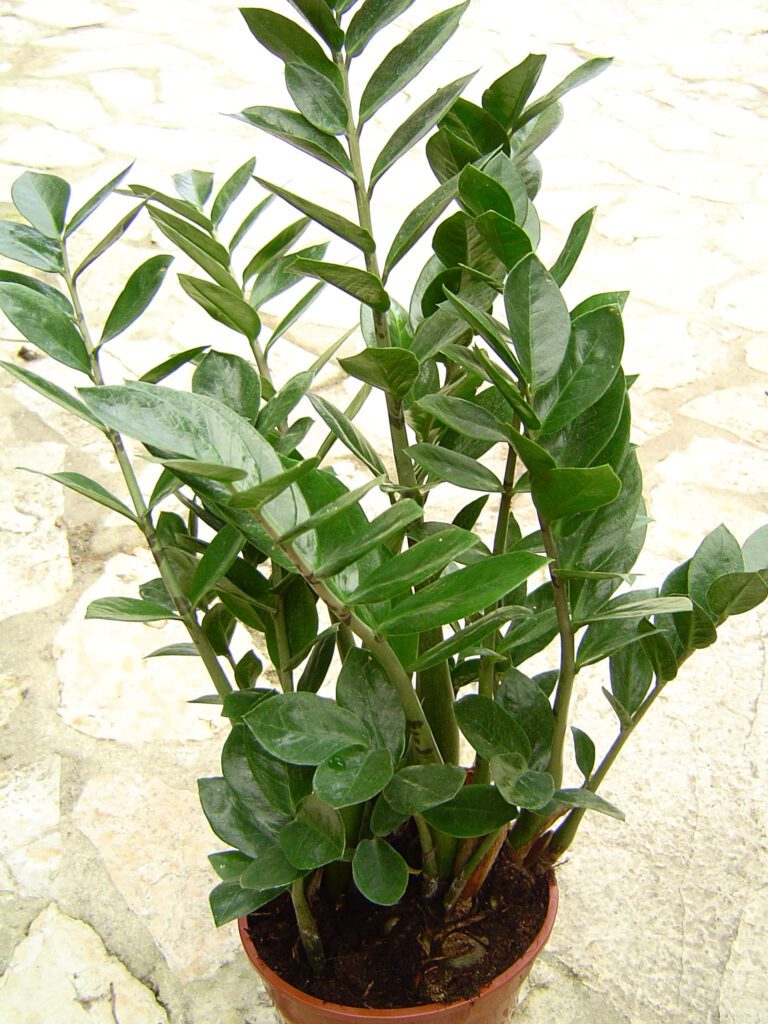
1. ZZ Plant (Zamioculcas zamiifolia)
The champion. ZZ plants store water and energy in fat underground rhizomes, which lets them skip active growth entirely in very low light and coast on reserves. I have seen ZZ plants survive six months in windowless basements with only occasional overhead LED lighting, no direct sunlight ever. Growth stops completely in those conditions, but the plant stays alive and looks the same.
Light needs: anything, including overhead LED only. Water: every 3 to 4 weeks, less if dim. Pet safe: no. See our full ZZ plant care guide.
2. Cast Iron Plant (Aspidistra elatior)
Victorian-era popularity was built on exactly this use case: the cast iron plant thrived in gas-lit parlors where actual sunlight rarely reached. Named for its near-indestructibility. Slow-growing, dark-green, and broadly leaved. Not exciting, but it endures conditions that kill other plants outright.
Light needs: low to none. Water: every 10 to 14 days. Pet safe: yes.
3. Snake Plant (Dracaena trifasciata)
Snake plants tolerate extended periods of no light by simply pausing growth. A snake plant in a windowless room will not produce new leaves but will remain firm, upright, and healthy for months. Add ambient LED light and it resumes slow growth.
Light needs: any to none. Water: every 2 to 4 weeks depending on dimness. Pet safe: no, mildly toxic. See our complete snake plant guide.
4. Pothos ‘Jade’ (Epipremnum aureum)
The solid-green Jade variety of pothos tolerates lower light than its variegated cousins (Golden, Marble Queen, N’Joy). In windowless rooms with ambient LED lighting, it survives and slowly trails. Expect smaller leaves and longer gaps between them than a pothos in bright light, but the plant stays alive.
Avoid variegated varieties in windowless rooms; they revert to solid green within a few months and often drop leaves first. See our pothos care guide.
5. Chinese Evergreen (Aglaonema)
Adapted specifically to rainforest floor conditions, Chinese Evergreens tolerate deep shade better than most common houseplants. The solid-green varieties (Aglaonema commutatum) handle the darkest conditions; darker-colored cultivars need slightly more ambient light.
Light needs: low to medium, including artificial-only. Water: every 7 to 10 days. Pet safe: no, toxic.
6. Heartleaf Philodendron (Philodendron hederaceum)
More shade-tolerant than pothos and willing to climb or trail. In a windowless room with consistent ambient light (12+ hours of LED exposure daily), philodendrons put out new leaves, albeit smaller than in bright conditions. Good for windowless bedrooms where you leave an overhead light on into the evening.
7. Parlor Palm (Chamaedorea elegans)
Another Victorian parlor survivor. Adapted to forest understory conditions with filtered, minimal light. Parlor palms need slightly more ambient brightness than the first six plants — they will struggle in a completely dark interior closet, but thrive under regular room LED lighting with 12+ hour daily duration.
Light needs: low but not zero. Water: every 7 to 10 days. Pet safe: yes.
8. Spider Plant (Solid Green Variety)
The variegated spider plant common in stores needs moderate light. The solid-green variety (sometimes called “green spider plant” or Chlorophytum comosum ‘Green’) tolerates lower light conditions and still produces hanging plantlets. Requires at least 8 hours of ambient LED exposure daily to thrive.
Light needs: low to medium. Water: every 7 to 10 days. Pet safe: yes.
9. Dracaena Marginata (Dragon Tree)
Tall, architectural, and low-maintenance. Tolerates low light better than most tree-form houseplants. In a windowless office or corner, a dracaena marginata under a decent floor lamp does better than almost any other “tree” houseplant option.
10. Peace Lily (Spathiphyllum)
One of the few plants that flowers in genuinely low light. A peace lily in a windowless bathroom with indirect artificial lighting often produces occasional blooms. The leaves droop dramatically when thirsty, which is useful in dim rooms where you might otherwise miss watering cues.
Light needs: low to medium, tolerates artificial-only. Water: every 5 to 7 days. Pet safe: no, toxic. See our peace lily care guide.
How Plants Survive on Only Artificial Light
This confuses most new plant owners: plants can photosynthesize under LED and fluorescent light. Not as efficiently as under sunlight, but the process works. The only requirements are enough photons of the right wavelengths and enough hours of exposure.
Standard room LED ceiling fixtures typically deliver 100 to 500 lux at floor level. Sunlight on an east-facing windowsill delivers 2,000 to 10,000 lux. That is a 10 to 100x difference. But the low-light plants above adapted to understory conditions where natural light is already diffused and reduced, so they can stretch the much dimmer office/apartment light into functional photosynthesis.
The trick is duration. A plant that would photosynthesize for 6 hours under bright sunlight can often keep pace photosynthesizing for 14 hours under artificial light. If you live somewhere with overhead lights on most of your waking hours, your windowless apartment is not as plant-hostile as it looks.
When You Actually Need a Grow Light
If you want anything beyond the ten species above — succulents, fiddle leaf figs, herbs, flowering plants, or anything you saw on Instagram — a grow light is non-negotiable. The good news: a basic LED grow light converts any space into a functional growing environment for around $30 to $60.
What to buy
Look for a full-spectrum white LED grow light rated 20 to 40 watts for a single plant, or a 2- to 4-foot bar-style fixture for a shelf or multiple plants. Clip-on lamps cost $20 to $30. Bar lights run $40 to $80. Avoid the “purple” red-and-blue only grow lights; they work but make your apartment look like a grow operation.
How to position it
Place the grow light 12 to 24 inches above the plant. Closer (6 to 12 inches) for high-light plants like succulents, farther (18 to 24 inches) for low-light plants that just want a supplement. If the leaves start bleaching or browning on the top, move the light higher.
Schedule
Most plants want 12 to 14 hours of light followed by 10 to 12 hours of darkness. Plants need the dark period for specific metabolic processes; running a grow light 24/7 actually reduces plant health. A $10 outlet timer automates this. Set it, forget it.
For a deeper dive on grow light types, spectrum, and positioning, see our indoor plant light guide.
Rotation Strategy for Multi-Room Apartments
Most “windowless apartment” situations aren’t literally zero windows — they are one-window studios, interior bedrooms in larger apartments, or offices without windows but adjacent to rooms with them. This unlocks a rotation strategy that no single-room plant owner can use.
The 3-month cycle
Pick your dim rooms and your bright rooms. Assign each plant a “home” in the dim room and a “recovery” spot in the bright room. Rotate them every three months. A ZZ plant can live in a windowless bathroom for 90 days, then spend 90 days in a brighter living room rebuilding reserves, then return. Both rooms always have plants. Neither plant is permanently stressed.
Weekend visits
Simpler version: once a week, move all your windowless-room plants into your one bright room on Saturday morning. Let them soak up 12 hours of natural light. Return them to their usual spots Sunday evening. This is not as effective as full rotation but gives plants a weekly boost.
Bathroom + living room pairing
Humidity-loving plants (parlor palms, Boston ferns, peace lilies) paired with a windowless bathroom for three months and a bright living room for three months often outperform plants kept in only one spot. They get the humidity spike and the light spike alternately.
Common Mistakes in Windowless Plant Care
Watering on a normal schedule
Plants in low or no light use water dramatically slower than plants in bright light. If your snake plant in a sunny window drinks every 10 days, the same plant in a windowless bathroom might go 21 to 28 days between waterings. Ignore the calendar. Check the soil. Overwatering is the single most common cause of death for windowless-apartment plants.
Expecting growth
Plants in windowless conditions slow down or stop growing entirely. This is normal survival behavior, not a problem. If your ZZ plant has not put out a new stalk in four months, that is expected. It is not dying; it is hibernating.
Choosing the wrong variety
Variegated varieties (Marble Queen pothos, variegated philodendron, variegated spider plant) lose their pattern in low light and often drop leaves before solid-green types. If you are stuck with a variegated plant in a windowless room, expect it to revert and thin out. Solid-green varieties handle the same conditions much better.
Placing plants in corners
Even in a windowless room, the center of the room near overhead lighting is brighter than a tucked-away corner. Move plants toward the center of ceiling light fixtures. A ZZ plant directly under an LED ceiling light does better than one shoved into a shadowy corner across the room.
Using scented candles or air fresheners near plants
Not strictly a light issue, but relevant in small windowless apartments. Scented candles, diffusers, and aerosol air fresheners release compounds that can damage sensitive plant leaves over time. If your apartment runs heavy on scent, keep plants in the least-scented room.
Frequently Asked Questions
Can plants really survive with no windows at all?
A small group of plants (ZZ plants, cast iron plants, snake plants) can survive for several months in completely windowless rooms with only occasional ambient lighting. For longer-term health, even these plants prefer some form of daily light exposure, either from room LED lighting on 10+ hours daily or a small grow light.
Will my plant grow under just fluorescent office lighting?
Most low-light plants (ZZ, pothos, philodendron, Chinese evergreen) survive under fluorescent office lighting. Growth is slow but the plants stay alive. For actual growth rather than just maintenance, supplement with a small LED grow light during work hours.
How long can a houseplant live in complete darkness?
Indefinitely for ZZ plants (months to a year, depending on reserves). Several months for snake plants, cast iron plants, and pothos. A few weeks for most other low-light plants. “Complete darkness” is rare in actual apartments; even a room with no windows usually has some ambient light from adjacent rooms or evening lamp use.
Do LED bulbs provide enough light for plants?
Standard room LED bulbs (the white ones you use for general lighting) can maintain low-light plants if they run 12+ hours per day and the plant is within a few feet of the fixture. They are not strong enough to support high-light plants like succulents. For those, you need a dedicated grow LED.
What happens if I put a succulent in a windowless room?
It will stretch, lose color, and slowly decline. Succulents need 4 to 6 hours of bright or direct light daily, which almost no windowless room provides. Skip succulents entirely in windowless spaces unless you run a dedicated grow light. The hardy-houseplant approach is to match species to conditions rather than fight conditions with difficult plants.
Is a windowless bathroom a good spot for plants?
Yes, surprisingly. The humidity from showers benefits many tropical houseplants. Pair the humidity with a low-light-tolerant species (ZZ, pothos, peace lily, parlor palm) and the bathroom becomes one of the more plant-friendly rooms in a windowless apartment. Just ensure there is some lighting on for several hours daily.
Do plants need a dark period, or can I leave grow lights on 24/7?
Plants need darkness. Photosynthesis occurs in light, but a separate metabolic process (respiration-based growth) happens in darkness. Running grow lights 24/7 reduces growth and weakens plants. Set a timer for 12 to 14 hours of light and 10 to 12 hours of dark.
Windowless Does Not Mean Plantless
The conventional advice — “houseplants need windows” — is marketing advice from people selling sunny-window plants. Match species to conditions, and even a basement studio becomes viable plant territory. Start with a ZZ plant in your dimmest room. Once you have kept one alive for 3 months, add a snake plant in another windowless corner. Within a year you will have a small collection thriving on whatever ambient light your apartment offers.
For a broader list of plants that tolerate low-light conditions (not necessarily zero-light), see our complete low-light houseplant guide. For the fundamentals of plant lighting and what “bright indirect” actually means, see our indoor plant light guide. For the most forgiving houseplants regardless of lighting, start with our hard-to-kill houseplants ranking.
Your windowless apartment is not disqualifying. It just narrows the list.